

























































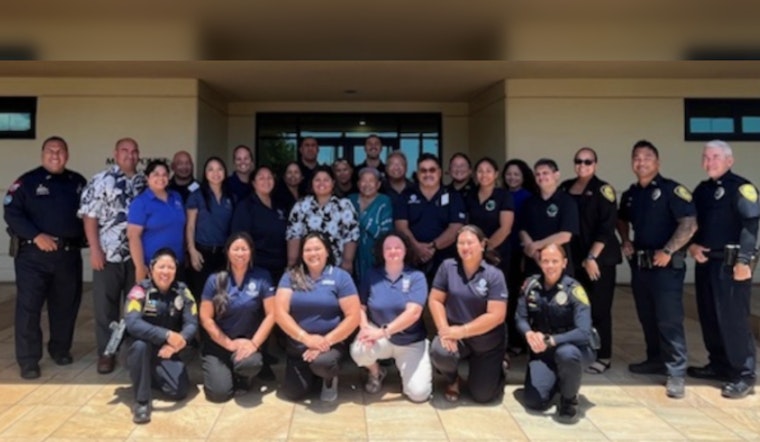
The Maui Police Department's Crisis Intervention Team program expanded its reach with 22 new graduates, as announced in a recent Facebook post by the Maui Police Department. Last Friday, the latest cohort, comprising both officers and civilians, successfully completed a 40-hour training, which equips them to better respond to individuals in crisis due to mental illness or emotional turmoil. This program, initiated in 2013, is the first of its kind in Hawaii and, with these latest graduates, now counts 280 trained individuals among its ranks.
Participants come from a diverse range of backgrounds, including the Maui Police Department, Job Corps Maui, Kamehameha Schools, Maui Aids Foundation, and many more local agencies and organizations. Since the inception of the CIT program, personnel from an array of institutions like the Adult Mental Health Division, Aloha House, Hawaii Department of Health, and the Maui Fire Department have been involved, deepening the community's capacity to handle mental health-related emergencies. The training, which is part of the Maui Police Department's CORE unit, teaches participants effective de-escalation techniques and helps ensure that vulnerable individuals receive the care and response they need, potentially before a situation escalates to violence or self-harm.
Dr. Alicia Rodriguez, a Law Enforcement Clinical Psychologist with Waves of Insight, served as the guide for this 18th CIT class, representing the tenth such training since the onslaught of the COVID-19 pandemic. The program included input and involvement from various guest agencies, instructors, and representatives from across the mental health spectrum. This collaboration aims to provide a multi-faceted approach to crisis intervention, informed by different perspectives and areas of expertise, as reported by the Maui Police Department.
The hands-on training was particularly focused on tackling real-life interactions with individuals amidst mental health crises. Topics covered included identifying signs of distress, learning communication strategies, and connecting people to appropriate mental health resources. According to the Maui Police Department's announcement, the training is a key component of their efforts "to interact with individuals potentially suffering from a mental illness or experiencing an emotional crisis." It's about creating a safer environment for both individuals in crisis and the community at large.





