

























































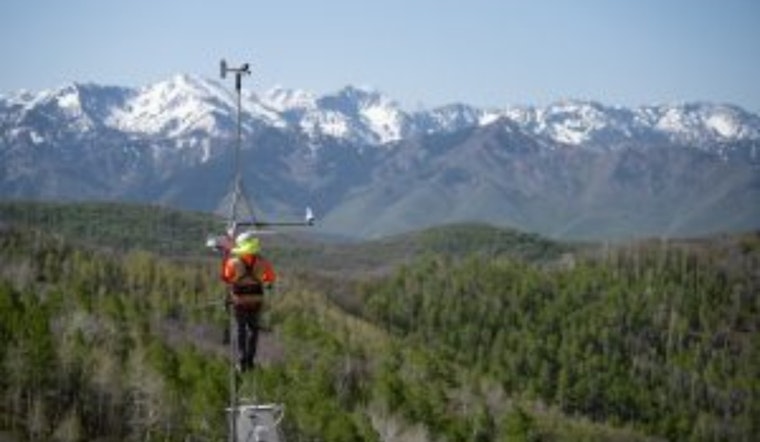
The Utah Department of Transportation (UDOT) has initiated its semiannual ritual of tending to the approximately 200 weather stations scattered throughout the state. These hubs provide UDOT with critical, real-time data that ensures the safety of travelers by informing the appropriate maintenance decisions, especially in the precarious conditions of winter. Checking up on these weather stations is not just a routine procedure; it's a lifeline for drivers, and the forecasted and current road conditions dictate where and when UDOT crews need to be deployed for effective snow and storm management.
During an ongoing expedition, UDOT crews have been spotted attending to the needs of these weather stations in Cedar City. According to UDOT, the stations boast an arsenal of sensors that monitor various atmospheric and environmental factors such as wind velocity, temperature, humidity, precipitation, soil temperature, snowfall rate, visibility, and even the conditions of the road itself. This breadth of information is integral for UDOT’s communication systems, which alert the public through variable messaging signs, the UDOT Traffic website, and direct transmission to vehicles via the latest vehicle-to-everything technology.
“This data helps us plan everything from our pre-storm treatment to post-storm management,” said UDOT Weather Operations Specialist and RWIS Coordinator Cody Oppermann, as reported by UDOT. These check-ups are a prelude to the extreme weather conditions these systems often face, especially on seasonal roads subjected to brutal winter elements. Maintenance of this infrastructure not only serves the immediate need for weather alerts but has proven cost-effective. In fact, for every dollar spent on labor and materials, the weather stations and their operational programs save an impressive eleven dollars, accumulating over $2.2 million in savings.
The maintenance schedule is designed with foresight; technicians assess and repair the weather stations during spring and fall, preparing them to withstand summer thunderstorms and the winter season's harshness. “So we’re going to look and make sure those sensors are cleaned up and working for the summertime so that we don’t have any flawed data,” Oppermann told UDOT. As the network extends, new weather stations may be installed on state-owned routes, especially in locations that lack prior coverage or in areas that are newly equipped with fiber optic cables. These stations are not just placed arbitrarily but are strategically positioned based on various factors such as elevation changes where snow accumulates or valleys prone to troublesome winds.





