

























































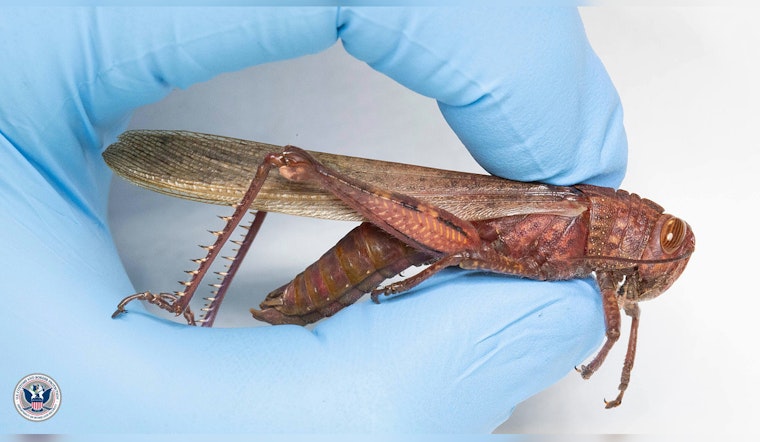
Travelers coming into the U.S. through Detroit Metropolitan Airport may be unintentionally carrying more than their personal items, as shown by a recent U.S. Customs and Border Protection (CBP) discovery. Earlier this year, CBP agriculture specialists found a live Egyptian locust inside the luggage of a traveler hailing from Albania, CBP officials informed CBS News Detroit in an article published earlier today. The incident occurred back in March but the details were only shared this month.
As per the officials, "Exotic locusts present a serious threat to U.S. agriculture due to them feeding on a variety of plants, including crops like grapevines, citrus trees, deciduous orchard trees, and vegetables." The attention to this matter was bolstered by the CPB's decision to post about the event on social media, where they highlighted the dangers posed by such pests. A social media post from the CBP Office of Field Operations on Facebook with the title "A SCRIPTURAL SEIZURE" reads, "#ICYMI - In March, CBP agriculture specialists at Detroit Metro Airport (DTW) discovered a live Egyptian locust (Anacridium aegyptium) in a traveler’s luggage from Albania."
CBP's agriculture specialists are the frontline defense in keeping the nation's agriculture safe from exotic species that can cause extensive damage. When known prohibited items are detected, they're destroyed, whereas unknown pests are sent off to the U.S. Department of Agriculture for further investigation. This isn't a solitary case; in the past years, Detroit Metro has been the site for other such discoveries, including a non-native burrowing grasshopper from Kenya in 2024, and six giant African snails from Ghana back in 2023.
The potential for "agro-terrorism," where bad actors deliberately target agricultural commodities or food supply, is a concern taken seriously by CBP. However, the agency points out that "most importers and passengers unintentionally bring these threats to the United States," as noted by CBS News Detroit.





