

























































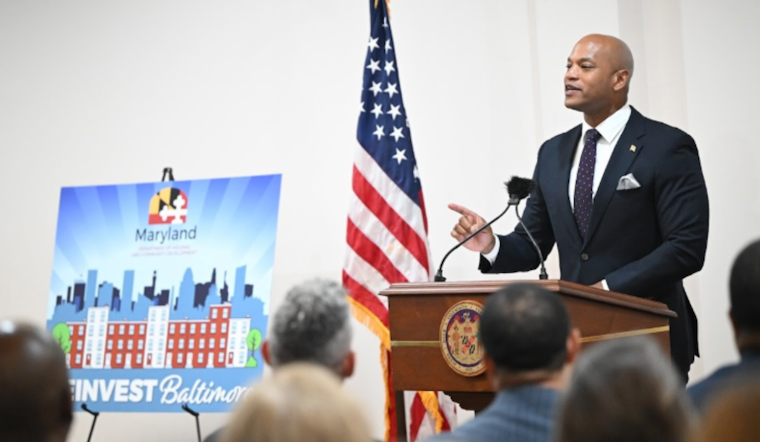
Last Thursday, Governor Wes Moore announced a substantial $50 million investment in the Baltimore Vacant Reinvestment Initiative Program, aimed directly at alleviating the issue of vacant and abandoned properties in Baltimore. The program, established by Governor Moore last October, now receives an accelerated award effort designed to expedite the revitalization of the city's neighborhoods.
According to details released, the initiative will not only transform these derelict structures into habitable residences but also aim to strengthen community bonds and enhance homeownership opportunities across Baltimore. "A coordinated effort between the State of Maryland, between the City of Baltimore, between partnerships of non-profits and also for-profit sectors, everyone coming from a different place having one unified goal: eliminating vacant properties and rebuilding home ownership in the City of Baltimore," Moore stated, as per WMAR2 News. This move comes as the city grapples with nearly 13,000 vacant homes and has plans to cut this down to "functional zero" within 15 years.
Further breaking down the $50 million, CBS News Baltimore reports that $15 million will be allocated toward the demolition, stabilization, and acquisition of vacant properties, with an additional $30 million allocated to 16 community development organizations. An additional $5 million is earmarked for substantial, mixed-use projects. The distribution acknowledges the need for a robust approach to tackling the crisis that requires significant funds and strategic allocation.
Moreover, Governor Moore has established a new Baltimore Vacants Reinvestment Initiative Support Fund in partnership with the Maryland Community Investment Corporation. This fund, which has already received over $1 million from philanthropic partners, provides "additional assistance to community development organizations," as Matthew D. Gallagher, a council member, pointed out to CBS News Baltimore. The support fund signifies a commitment from the public and private sectors, as well as philanthropy, to collaborate comprehensively in addressing the vacancy issue.





