

























































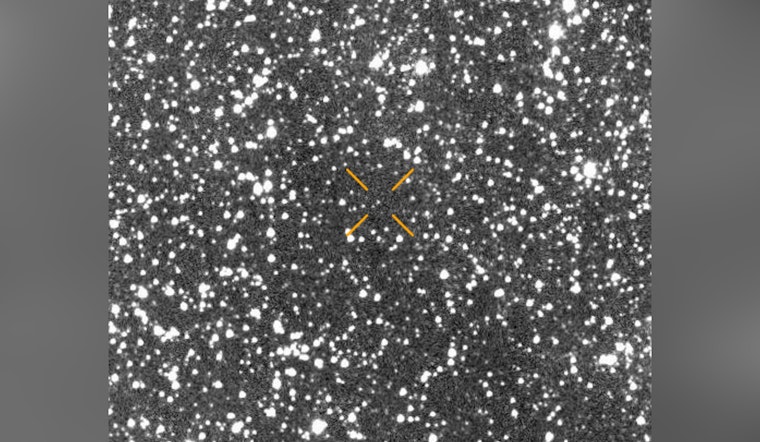
Astronomers at the University of Hawaiʻi have identified an object from outside the solar system, now named C/2025 N1 or 3I/ATLAS. It was first seen by the NASA-funded Asteroid Terrestrial-impact Last Alert System in Chile, which is designed to detect hazardous asteroids. The object is moving at over 150,000 mph and is expected to pass closest to the Sun in October. It will not collide with Earth. "Spotting a possible interstellar object is incredibly rare, and it’s exciting that our [University of Hawaiʻi]-operated system caught it," said astronomer John Tonry, according to Big Island Now.
Further observations confirmed that 3I/ATLAS is an interstellar object, making it only the third known visitor from beyond our solar system after 1I/ʻOumuamua and 2I/Borisov. Added to the Near-Earth Object confirmation list by the International Astronomical Union’s Minor Planet Center, 3I/ATLAS stands out with its high velocity and possible comet-like traits, including signs of venting gas and dust. First detected last Tuesday, the object initially gave the impression that "it looked completely garden variety," but calculations soon revealed its extraordinary origin. Larry Denneau, an astronomer and co-manager of Asteroid Terrestrial-impact Last Alert System, remarked, "At that point it really hits you, that this little button push you did the night before has created this frenzy," as reported by Nature
As the object continues its path, astronomers around the world are adjusting their telescopes to observe it more closely. "Will tell us about what conditions were like in the protoplanetary disk where it formed," said Michele Bannister, an astronomer at the University of Canterbury. These observations help scientists study material from other parts of the galaxy, as mentioned by Nature.





