

























































MIT is taking a significant leap into women's health research with the launch of the Fairbairn Menstruation Science Fund, a venture bankrolled by Emily and Malcolm Fairbairn to the tune of $10 million. The initiative aims to shed light on sex-based differences in human immunology and their links to a spectrum of gynecological and systemic inflammatory diseases, which disproportionately afflict women. The fund, bolstered by the couple's aspiration for an added $10 million in matching funds, heralds a concerted effort toward addressing gaps in an underfunded field of medical science.
Anantha P. Chandrakasan, provost of MIT and the Vannevar Bush Professor of Electrical Engineering and Computer Science, commented on the fund's potential in a statement obtained by MIT News. "I’m deeply grateful to Emily and Malcolm Fairbairn for their visionary support of menstruation science at MIT. For too long, this area of research has lacked broad scientific investment and visibility, despite its profound impact on the health, and lives of over half the population," said Chandrakasan. The fund is set to drive the advancement of initiatives such as the building of a "living patient avatar" facility and the development of physiomimetic models.
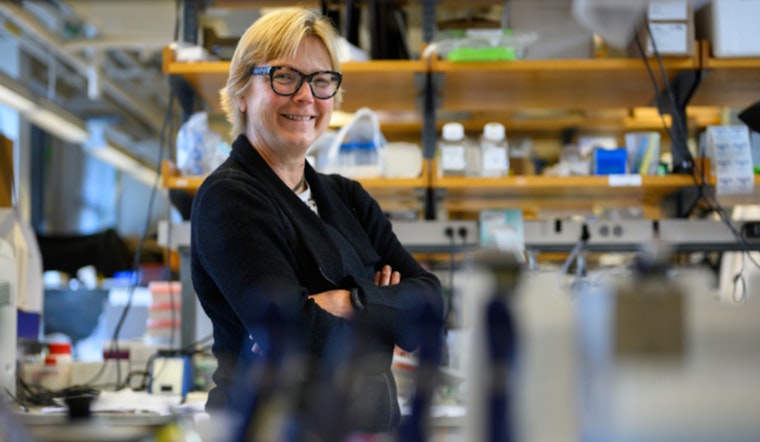
Linda Griffith, professor of biological and mechanical engineering and director of the MIT Center for Gynepathology Research (CGR), underscores the significance of the fund. "The enormous sex-based differences in human immunity," and the pursuit of next-generation drug discovery technologies, are among the targeted research areas. By employing organs on chips, MIT researchers plan to replicate patient-specific tissue models to enhance preclinical testing of drugs. Griffith's multidisciplinary group has engineered microfluidic platforms that can grow tissues complete with blood vessels and circulating immune cells.
Griffith explains the impetus behind the technology's evolution: "Pharma and biotech realize that we need living models of patients and the computational models of carefully curated patient data if we are to move into greater success in clinical trials," she told MIT News. The funds will enhance infrastructures for high throughput assays and improved drug testing models that can potentially bridge the transition from foundational research to practical application in pharmaceutical settings, something which industry and government agencies are keenly interested in.
Aside from the direct benefits of the research, this fund is poised to help reduce the stigma surrounding menstruation and provide much-needed attention to research on conditions like endometriosis, abnormal uterine bleeding, debilitating anemia, and polycystic ovary syndrome. "This fund is catalytic," Griffith acknowledges, pointing out the cascading effect it can have on attracting additional investment. Improving understanding of complex ailments that go underdiagnosed in women is at the core of the initiative, as discussed by Emily Fairbairn, whose personal experiences with Lyme disease and endometriosis have galvanized her advocacy. She lauds the MIT ethos for its serious approach to integrating various scientific disciplines in women's health research.





