

























































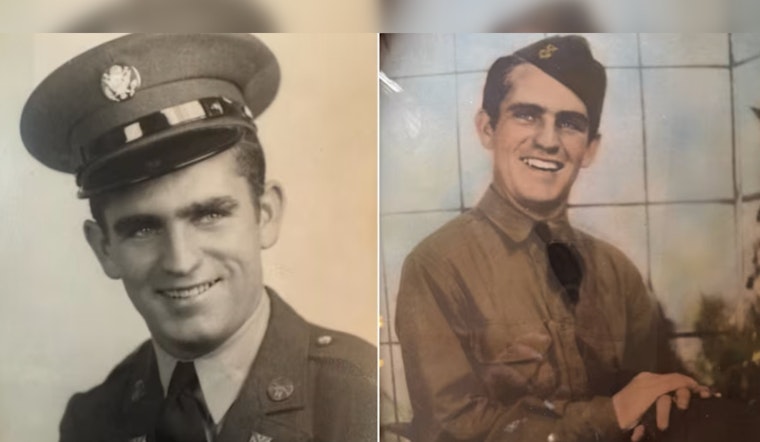
Seventy-three years after the fall of Bataan to Japanese forces in World War II, the remains of a Detroit native, U.S. Army Pvt. Kenneth L. Kramer has been positively identified and accounted for. Kramer, who was a mere 20 years old at the time of his death, served with the 19th Air Base Squadron, 20th Air Base Group. His identification was confirmed by the Defense POW/MIA Accounting Agency (DPAA), as reported by the Detroit News.
The DPAA has worked diligently to recover and identify the remains of missing U.S. military personnel. Kramer's story, like thousands of others, was a harrowing one; after the invasion of the Philippine Islands in December 1942, he endured the infamous 65-mile Bataan Death March and was ultimately interned at the Cabanatuan POW camp—a site of immense suffering where over 2,500 POWs perished, as per a report by ClickOnDetroit. Kramer succumbed to diphtheria on June 29, 1942, and was buried alongside his fellow prisoners in a mass grave at the camp cemetery.
Following the war, the American Graves Registration Service exhumed 25 sets of remains from Kramer's reported final resting place, Common Grave 407. At that time, nine sets could not be identified, leading them to be interred as Unknowns at the Manila American Cemetery and Memorial. It wasn't until November 2019 that an initiative by the DPAA brought these remains stateside for analysis. Dental, anthropological, and isotope studies, combined with mitochondrial DNA analysis, enabled scientists to finally put a name to the previously unknown soldier, as noted by WXYZ.
Kramer's remains have been meticulously cared for by the American Battle Monuments Commission over seven decades, and his identification provides a long-overdue measure of closure to his family and community. His reburial is scheduled to take place in Holly, Michigan, in October of this year, marking the end of a long journey home.





