

























































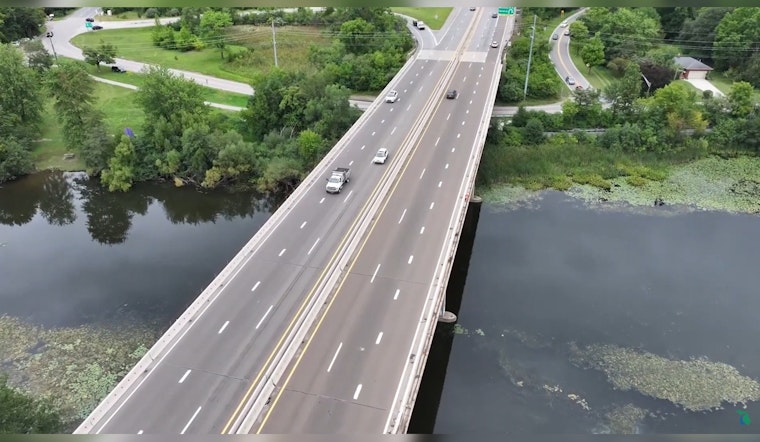
Michigan drivers may need to prepare for a future where they'll navigate around more orange barrels and detour signs, as the Michigan Department of Transportation (MDOT) warns of bridges at risk due to a lack of funding. The M-14 and US-23 Business Route (BR) bridge over the Huron River and MDOT railroad is highlighted as a crucial problem in MDOT's latest video news release. This bridge, vital for Ann Arbor's connectivity, was built in 1956 and though it stands in fair condition now, its days are numbered without financial intervention.
Most of MDOT's bridges were designed to last 50 to 60 years, yet here we are, encroaching on nearly seven-decade old infrastructure. According to a statement made by the Michigan government's official site, MDOT University Region Bridge Engineer Dale Allen mentioned, "The only proper fix would be a full replacement," for the mentioned bridge. But with replacement costs soaring up to $150 million—almost quadruple their annual budget for such repairs—it's clear to see why funding woes have Michigan’s transportation officials deeply concerned about the future.
The harsh reality is that almost two-thirds of MDOT's bridges have already exceeded their expected life spans. The impending doom of infrastructure collapse could lead to over 100 trunkline bridges closing by 2035, affecting close to 1.8 million drivers daily. In the MDOT University Region alone, which includes nine counties, 99 bridges are listed in poor or worse condition, with 33 at risk of closure by 2035, which would impact more than 100,000 daily road users.
Bridges are not something to simply replace overnight. On average, it takes two years to rebuild a bridge once it has been closed to the public. While the investment is steep, the new structures are designed with an 80 to 100-year service life, signifying a long-term payoff. Still, as MDOT Director Bradley C. Wieferich told the Michigan government's official site, "Without additional investment, those projections will get worse."
It's not just about the inconvenience to drivers or longer routes for tourists. Rebecca Curtis, MDOT's director of the Bureau of Bridges and Structures, during a podcast, spoke about the cascading effects a road funding crisis can have on the state. Michigan Department of Labor and Economic Opportunity (LEO) Director Susan Corbin echoed these sentiments, stating that without a long-term solution, "The effects would spread across industries and communities, causing job losses, shrinking economic activity and creating long-term challenges for Michigan's workers and families," as noted by the state official website.
Following the wind-down of the Rebuilding Michigan bond funding program, MDOT anticipates a deep cut to their annual reconstruction budget. This would result in a reduction from $495 million per year to $222 million, which translates to about 2,800 fewer construction jobs by 2026. The figures lay it bare: investment in Michigan’s transportation infrastructure is not only about maintaining the status quo but also about safeguarding the economic vitality of the state.





