

























































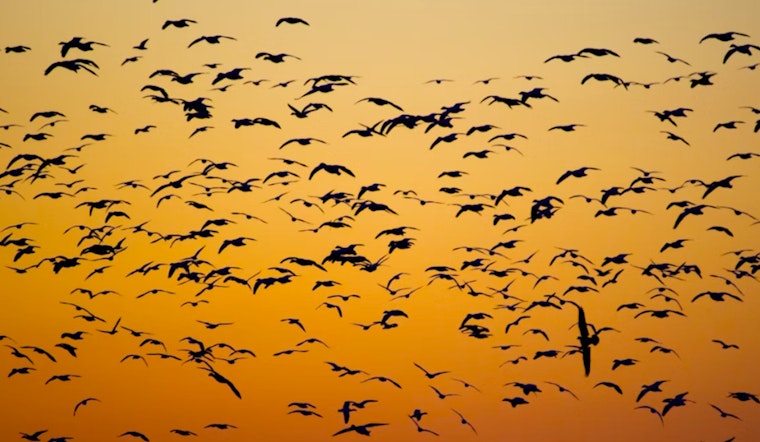
Every summer evening, as thousands of drivers traverse the Yolo Causeway between Davis and Sacramento, one of California's most spectacular natural phenomena unfolds just beneath their feet. More than 250,000 bats emerge at sunset in what observers describe as ribbons streaming across the sky, creating one of the region's most mesmerizing wildlife displays.
This isn't just a curiosity for nature enthusiasts—it represents the largest urban colony of Mexican free-tailed bats in California. The massive colony provides invaluable agricultural services while offering Sacramento-area residents a front-row seat to one of nature's most dramatic nightly performances.
An Accidental Wildlife Haven
According to Bay Nature, the bats discovered the causeway's expansion joints in the 1970s, shortly after the joints were installed. What makes this concrete structure so appealing to these flying mammals lies in unintentional engineering that perfectly mimics their natural habitat.
"The temperature is good, the black asphalt absorbs the heat, the cement holds the heat stable. Those crevices are pretty darn deep, so there are almost no predators," explains Corky Quirk, program coordinator for the Yolo Basin Foundation, as reported by CBS Sacramento. The expansion joints, designed to prevent bridge cracks from temperature changes and earthquakes, also happen to retain heat and remain generally inaccessible to predators.
Nature's Pest Control Army
These bats aren't freeloading under the freeway—they're providing substantial economic benefits. As detailed by CapRadio, the 250,000 bats consume approximately 500 bags worth of insects every night. When female free-tailed bats are pregnant or nursing, they must eat 100% of their body weight in insects per evening—equivalent to a 100-pound human consuming 400 quarter-pounders daily.
Mexican free-tailed bats typically target mosquitoes and agricultural pests like corn earworms, though moths remain their preferred meal. This massive consumption of crop-destroying insects helps farmers in the region naturally protect their fields, contributing to lower food prices for consumers.
The Evening Show
The nightly flyout has become a beloved local attraction, with sold-out viewing events drawing crowds eager to witness the spectacle. According to KCRA, nearly 250,000 bats emerge each summer evening, creating displays that visitors describe as mesmerizing.
Once airborne, the Mexican free-tailed bats soar up to two miles high, catching wind currents that carry them 30 to 50 miles away for their nightly hunt. The dramatic emergence typically begins around sunset and continues as darkness falls.
Seasonal Cycle and Baby Boom
This phenomenon follows an annual pattern tied to the agricultural calendar. As noted by the Davis Enterprise, the maternity colony grows daily as bats return from their winter locations. As weather warms and insect populations explode with crop growth, the bats establish their summer residence.
From late June to early July, these Mexican free-tailed bats give birth to single pups weighing about one-third of their mother's weight. Bay Nature describes this as equivalent to humans giving birth to kindergarteners, highlighting the remarkable physical demands on female bats during reproduction season.
Viewing Opportunities
The Yolo Basin Foundation offers structured viewing experiences throughout the summer months. Bat Talk and Tours run from June through September, taking place at the Yolo Bypass Wildlife Area Headquarters on Country Road 32B in Davis. CBS Sacramento reports tickets cost $15 for adults and $5 for children ages 6-17, with kids under 5 attending free.
For independent viewing, visitors can drive west on the Causeway, take 32A toward E. Chiles Road, park outside the Yolo Bypass Wildlife Area gates, and climb the levee for optimal sunset viewing positions.
Conservation Success Story
The popularity of these viewing events reflects growing appreciation for ecosystem services provided by wildlife. The Yolo Causeway colony represents a rare conservation success where human infrastructure inadvertently created thriving habitat for native species while delivering measurable economic benefits to surrounding agricultural communities.
"I think it's important to remember that this world is shared and it's not just ours, and there's so many different creatures that are performing essential functions every day to keep our world habitable," one wildlife expert told KCRA. As climate change and habitat loss challenge California wildlife populations, this colony demonstrates how infrastructure and nature can coexist beneficially.





