

























































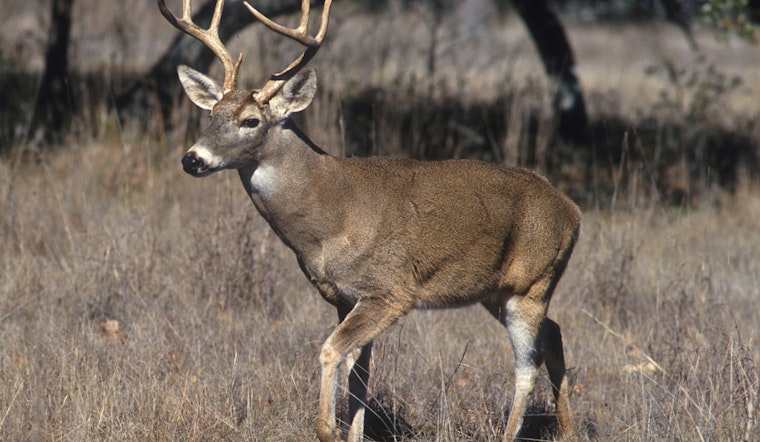
The Michigan Department of Natural Resources has confirmed the first cases of epizootic hemorrhagic disease (EHD) in the state for 2025. The disease has been detected in white-tailed deer in Eaton, Jackson, Van Buren, and Washtenaw counties. Confirmation of the EHD virus was made through a joint effort involving the DNR Wildlife Health Section, Michigan State University Veterinary Diagnostic Laboratory, and the Southeastern Cooperative Wildlife Disease Study, according to the DNR.
The disease, epizootic hemorrhagic disease (EHD), significantly affects deer populations and is transmitted by biting midges. It does not spread directly from deer to deer, and there is no known risk to humans, pets, or other wildlife in Michigan. According to DNR Wildlife Division specialist Brent Rudolph, previous outbreaks have usually been limited to one or a few counties, though some, such as the 2012 outbreak, have extended to around 30 counties. The disease primarily affects deer in late summer and early fall, particularly in years with wet spring conditions followed by hot, dry summers that support midge activity. The spread typically stops with the first frost, which kills off the midges responsible for transmission.
If outdoorsmen or hikers encounter deer that appear ill or are found dead from suspected epizootic hemorrhagic disease (EHD), the Michigan Department of Natural Resources encourages the public to report the sighting through the "Diseased Wildlife" report system, available on the DNR’s "Eyes in the Field" online platform. Deer affected by EHD may show symptoms such as lethargy, disorientation, lameness, unresponsiveness, and physical signs like bloody discharge from the nose or mouth, a swollen tongue, or swelling around the head. However, a laboratory test is required to confirm EHD. Once a confirmed case is identified in a county, additional testing is not required, but reporting suspected cases continues to help the DNR monitor the scope of the outbreak, as per the department's release.
Despite the recent findings, Rudolph noted a key point: "Deer that survive epizootic hemorrhagic disease develop immunity to the virus, and outbreaks are rarely seen in the same area in consecutive years." He also explained that not all deer in affected regions will contract EHD, and not all infected animals will die from it. The overall long-term impact on Michigan's deer population is expected to be limited, as major die-offs, while sometimes severe, are generally confined to small geographic areas. In most cases, local deer populations tend to recover within a few years, as reported by the DNR.





