

























































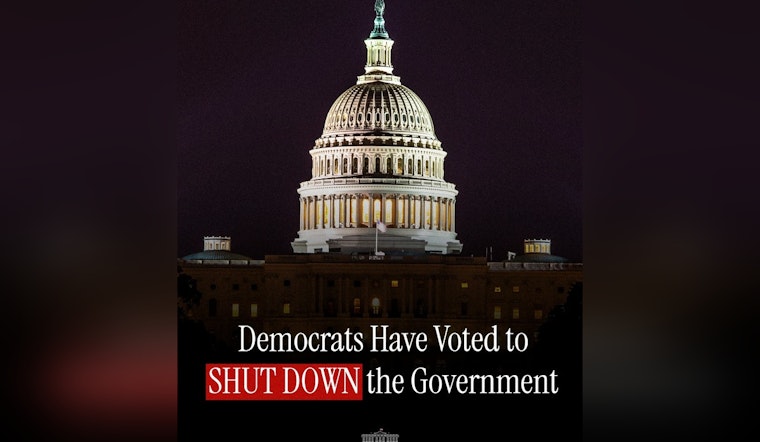
As the clock ticks closer to a governmental standstill, the tug-of-war between the nation's political parties intensifies. In a recent appearance on ABC News, Republican House Appropriations Committee Chairman Tom Cole pinpointed Democrats as the architects of the impending government shutdown. His comments underscored a narrative of discord, with a clean Continuing Resolution (CR) put forth by Republicans meeting opposition from Democrats, who are leveraging government funding against a raft of demands.
Cole said they voted to keep the government open for seven more weeks while working on funding bills, adding that extra policy issues don’t belong in a temporary funding plan. In an interview with ABC News, he noted most Republicans supported keeping the government open, while most Democrats did not, suggesting they bear responsibility for the shutdown.
Cole argued that Democrats are asking for $1.5 trillion in spending just for a four-week extension, calling it unreasonable. He suggested this shows Democrats actually want a government shutdown, focusing on long-term goals instead of keeping the government running in the short term.
Despite the rising tensions, there's a hint of optimism regarding bipartisan negotiations on at least some of the appropriations bills. "I’d be happy to sit down with my Democratic colleagues. We actually have been negotiating a number of appropriations bills, [and we’re] pretty close to having three of them done. But this puts a chill on things, it stalls things," stated Cole in the House Committee on Appropriations press release. Yet, the shadow of the shutdown looms large, and as per Cole's views, the Democrats might be using it as a political maneuver to reaffirm their opposition to Republican positions and President Trump.
The stakes of this shutdown stretch beyond the halls of Congress, impacting both federal workers and the public who depend on government services. As both sides of the aisle gear up for what may become a protracted battle, the American people are left to weigh the consequences of a political impasse that risks derailing the functions of their daily lives.





