

























































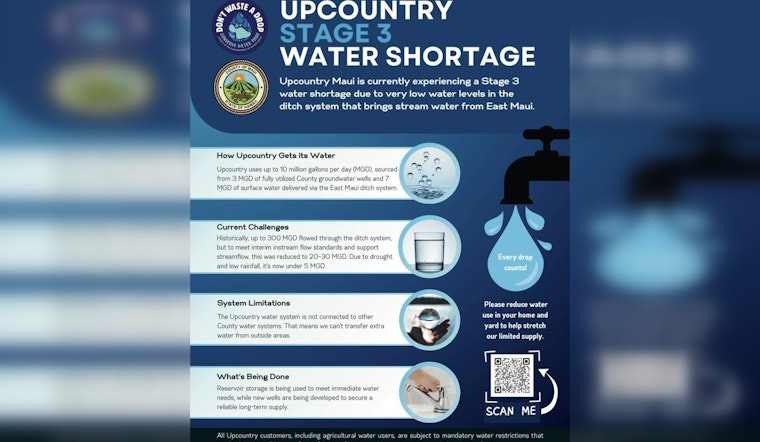
In a dry and straightforward statement, the County of Maui Department of Water Supply (DWS) unfurled the tapestry of a severe water crisis gripping the Upcountry region. As reported by Maui County's official announcement, the Stage 3 water shortage encompasses areas like Makawao, Haʻikū, and Kula, dictating that residents cease all nonessential water usage and adhere to a roster of strict restrictions.
With the drought tightening its grip, measures are drastic. Mandatory rules halt personal vehicle washing, prohibit the use of potable water for construction meters, and make costly turf grass irrigation no longer an option. Plants can only be watered once a week via drip systems or by hand. Even agricultural users, typically granted some leniency, are now equally bound by the restrictions, as their previous 180-day exemption has ended. Recent rains have failed to provide relief, barely affecting the area’s water sources—the East Maui streams and county-operated wells.
For a glimpse into the heart of the matter, the department explains that a "prolonged drought has drastically reduced stream flow in East Maui," as noted by the county's official website. The ditches, through which surface water once flowed generously, now stand near empty. In numbers, the Upcountry region guzzles up to 10 million gallons per day, seeking nourishment from a combination of county wells and East Maui surface water, yet the streams are currently delivering less than 5 MGD—a pittance against the needs of the land.
DWS offered solace in the form of assurance against rate hikes. Despite the dire situation, Maui County insists that "DWS is not raising rates at this time due to the water shortage." Meanwhile, they've not left residents to weather the drought alone, providing free water conservation tools such as faucet aerators and showerheads, available at a local office in Wailuku.
How long will the Upcountry's thirst persist? The answer is tied to nature's whim—the restoration of stream flows and reservoir levels. Until then, the community braces and conserves, adopting water-saving habits like fixing leaks promptly, and embracing drought-tolerant landscaping techniques. A beacon of guidance shines from the DWS website, offering advice and updates for residents inching their way through this parched period.




