

























































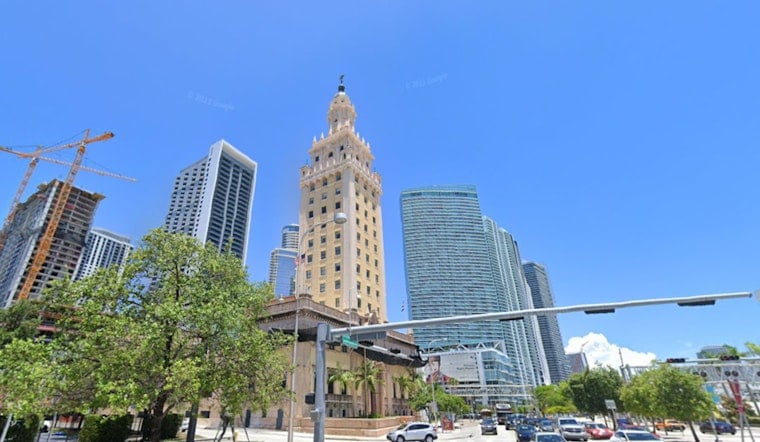
A Florida judge has put a hold on the transfer of a highly valued piece of downtown Miami real estate intended for Donald Trump's presidential library. Circuit Judge Mavel Ruiz issued a temporary injunction after allegations surfaced that local college officials sidestepped a state transparency law in the transaction process, as reported by Local 10 News.
The contested land, spanning nearly 3 acres and worth in excess of $67 million, sits on a prestigious slice of Biscayne Boulevard, according to a 2025 assessment by the Miami-Dade County property appraiser. An expert in real estate predicted the lot's worth could escalate by hundreds of millions more, due, to its prime location and development potential. Marvin Dunn, a Miami activist focused on local Black history, has taken the fight to court, arguing that Miami Dade College's Board of Trustees didn't give proper public notice before their September 23 decision to relinquish this parcel, as Politico detailed.
The legal challenge to the library's future site emerges from a broader concern for governmental transparency. "This is not a case, at least for this court, rooted in politics," Judge Mavel Ruiz remarked, reinforcing the basis of the legal contention. Dunn's lawsuit highlighted procedural concerns over the state-run school's board conduct, which, if substantiated, could imply a violation of the Florida Government in the Sunshine law.
Moreover, the matter has rippled beyond the local college board's action. Subsequently, Florida's Republican Gov. Ron DeSantis and the Florida Cabinet took the decision to transfer the land once more, essentially handing control over to the Trump family by deeding it to their foundation for the library. Richard Brodsky, Dunn's attorney, stated that the "issue before the court was not a question of politics, but whether the public board followed the open government law." "The people have a right to know what they’re going to decide to do when the transaction is so significant, so unusual and deprives the students and the college of this land," Brodsky told Politico.





