

























































The numbers are eye-popping. Office demand in San Francisco has surged 112% year-over-year and 60% just in the last quarter, according to new data from real estate software firm VTS. But if you've walked through downtown lately and noticed the "For Lease" signs still dotting empty buildings, you might be wondering: where exactly is this red-hot market everyone's talking about?
The disconnect isn't an illusion—it's timing. According to the San Francisco Standard, VTS tracks the very beginning of tenants' office search journeys, when companies are just starting to tour spaces and evaluate options. That early-stage interest won't translate into bustling sidewalks or packed lunch spots for months, maybe years.
"Everyone's been hearing the hype around AI for quite some time, but the amount of growth we saw was certainly a surprise to us," Max Saia, VTS research executive, told the Standard. The tech sector—specifically artificial intelligence companies—is driving the surge, with office demand from technology firms increasing a staggering 378% year-over-year.
The AI Effect is Real, But Uneven
The artificial intelligence boom has fundamentally reshaped San Francisco's commercial real estate landscape. According to Commercial Observer, AI companies have leased more than 5 million square feet in the city over the past five years, and CBRE predicts they'll take an additional 16 million square feet by 2030—potentially cutting the vacancy rate from 35.8% to less than 18%.
The Bay Area now hosts more than 800 generative AI firms, with San Francisco capturing $103 billion of the $239 billion in venture capital invested in AI companies nationally between 2020 and early 2025. Major players like OpenAI now occupy nearly 1 million square feet across multiple buildings, while Anthropic recently added another 100,000 square feet across from its headquarters, as reported by The Real Deal.
But this AI-driven recovery isn't lifting all boats equally. The spoils are concentrated in newer, amenity-rich buildings in desirable locations. Trophy properties and Class A buildings with great views of the Ferry Building, the bay, or the Golden Gate Bridge are seeing intense competition, while older buildings requiring significant improvements may languish indefinitely.
Flight to Quality Intensifies
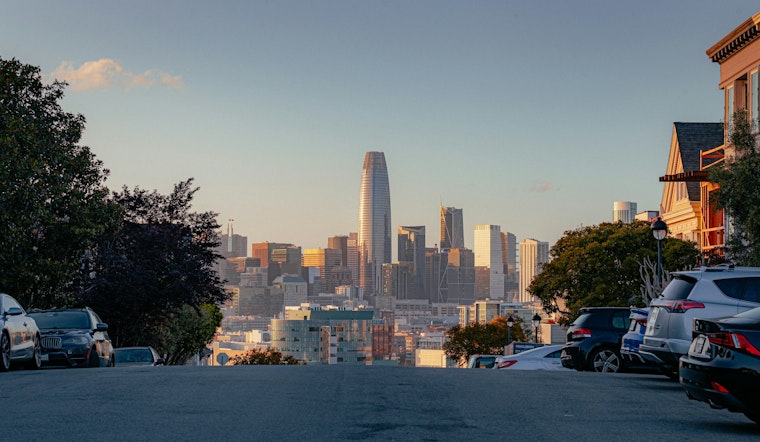
The Transamerica Pyramid exemplifies the widening gap between winners and losers in San Francisco's office market. After a $1 billion renovation completed in September 2024, according to Downtown San Francisco, leasing activity increased 80% and vacancy rates dropped from 50% in Q2 2024 to 33.8% in Q1 2025. The building now commands rents ranging from $155 per square foot on lower floors to $300 at the top, making it the third-priciest office building in the United States.
Global law firm Morgan Lewis signed a 123,000-square-foot lease there earlier this year, the San Francisco Standard reported, leaving behind its longtime home at One Market Plaza where it had been paying $115 per square foot. The premium amenities—including a sky bar, wellness center, and reimagined redwood park—proved worth the higher price tag.
Meanwhile, landlords of less-desirable properties are offering increasingly generous concessions. According to Commercial Observer, some tenants are receiving two months of free rent for every year in their lease term, with tenant improvement allowances reaching $225 per square foot—more than double the $100 typical in 2019.
The Vacancy Paradox
Here's the head-scratcher: San Francisco still has roughly a third of its office space sitting vacant. The city's vacancy rate hovered around 35% through most of 2025, according to IPG, down from a peak of 36.9% but still dramatically above the pre-pandemic low of 4.7% in Q2 2019.
"It will turn into positive leasing and net absorption eventually for sure, but there's still a huge supply overhang," Saia told the Standard. "We'll have to see multiple quarters of this magnitude before we start to feel like we're on a true trajectory back to normal. And it will take years to recoup everything that was lost."
Other firms are tracking similar increases. JLL's Alexander Quinn noted that approximately 8.5 million square feet of office space is currently in demand, versus 6.7 million square feet in July 2018. "What's compelling to me is that this is even after we've had a pretty robust 12-month rolling average of leasing activity," Quinn told the Standard.
Comparing Apples to Apples—Or Not
San Francisco's growth rate is unmatched nationally. New York has the second-highest demand, though its rate actually fell quarter-over-quarter—in part because that market fell less dramatically during COVID and recovered faster. The Real Deal reported that businesses sought 7.9 million square feet of offices in San Francisco in Q3 2025, marking an all-time high for demand in the city.
VTS determines demand by tracking the total square footage that tenants are actively searching for each month—essentially measuring the front end of the leasing pipeline rather than signed deals. This methodology captures tenant interest 6-9 months before leases are finalized, making it an early indicator but not a reflection of actual occupancy.
Return-to-Office Momentum Builds
The demand surge coincides with increasingly aggressive return-to-office mandates. IPG reported that San Francisco ranked third nationally for year-over-year office visit growth in March 2025, with visits up 9.6% from the previous year. By July, according to SFGATE, San Francisco posted a 21.6% year-over-year increase in office foot traffic—the strongest performance of any city tracked by Placer.ai.
Mayor Daniel Lurie announced that most city employees would be expected to return to the office at least four days a week by late April, while private sector companies like JPMorgan Chase began enforcing five-day-per-week policies for many San Francisco employees in early March.
Political and Economic Context
The office market resurgence comes amid broader efforts to revitalize downtown San Francisco. Mayor Lurie's "Heart of the City" initiative has marshaled close to $100 million in private capital since he took office, the Standard reported, focusing on public safety, cleanliness, and business development.
Related California is moving forward with plans for a $750 million, 41-story luxury office-and-hotel tower in the Financial District, as reported by the San Francisco Examiner, a significant vote of confidence in the market's long-term prospects.
The city has also approved office-to-residential conversion programs to address the oversupply, with Mayor Lurie signing legislation in May to create a Downtown Revitalization Financing District. Preliminary analysis identified approximately 1,200 eligible parcels that could potentially be converted to housing.
The Reality Check
Despite the optimism, experts caution that San Francisco isn't out of the woods yet. "We still have over a third of the space vacant in San Francisco, which is well above any historic norm, and pricing has gone down dramatically," Quinn told the Standard. The demand for space shows "real positive signs for the city," he added, "but we still have a long way to go."
The trajectory is encouraging but fragile. CBRE's Colin Yasukochi predicts that if current trends continue, AI companies could occupy 20 million square feet by 2030. But that assumes the AI boom doesn't cool, that funding continues to flow, and that these companies maintain their preference for in-person collaboration.
For now, San Francisco finds itself in an unusual position: leading the nation in office demand growth while simultaneously sporting one of the highest vacancy rates. It's a paradox that captures both the depth of the pandemic's impact and the potential strength of the recovery—assuming those touring tenants eventually sign on the dotted line.





