

























































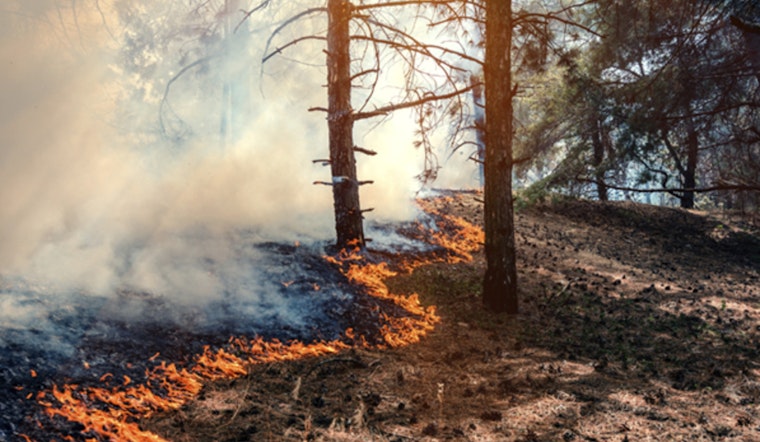
In response to the escalating risk of wildfires due to dry conditions, Durham County officials have put into effect a widespread burn ban commencing from 6 a.m. on Monday. This measure, enforced by the Durham County Office of Emergency Services Fire Marshal Division, will remain in place indefinitely, though a reassessment is scheduled for five days following its implementation to evaluate whether the ban should be lifted or upheld.
Contributing factors to this decision included a combination of the weather forecast and a spike in emergency calls regarding outdoor fires, shared Assistant Fire Marshal Tyler Fitts. The prohibition extends to all forms of outdoor burning, from casual campfires to the incineration of yard waste, across the entire county outside the limits of the city proper. According to the restrictions detailed by the Fire Marshal Division, even cooking over open flame falls under the scope of this ban. Whether enjoying a family gathering or living outside the urban heart of Durham, everyone is urged to heed the ban for the safety of all, as noted in a statement obtained by the Durham County news release.
While the disposal of trash by burning is a constant infraction, it is underscored by the current restriction against uncontained fires, such as bonfires and other open-air combustions. "In accordance with the Durham County Ordinance and the North Carolina State Fire Prevention Code burn bans may be enacted at a local level within 100 feet of a structure," the Fire Marshal's office indicates, broadening the ban's reach, as per the Durham County news release.
Fire departments have been granted the authority to extinguish any unsanctioned fires promptly, said Fitts, emphasizing that the ban is meant to serve as a precautionary and informative measure, not a punitive one. Seeking to prevent the potential for disaster rather than penalize after the fact, officials are calling on residents and visitors to collaborate by observing this prohibition and thereby reducing the risk to life, property, and the broader community.


