

























































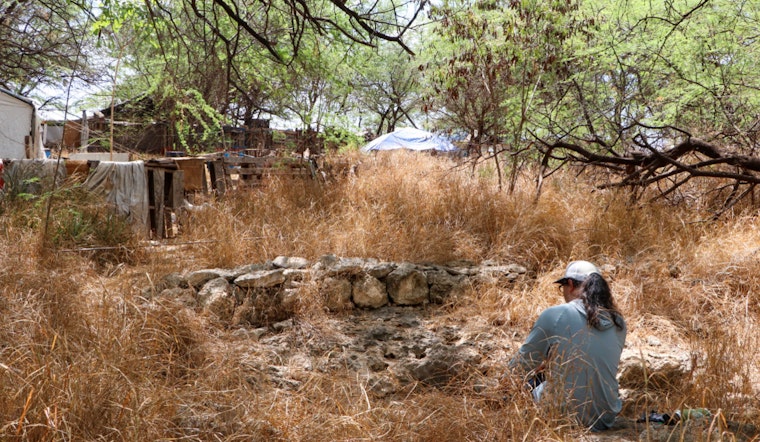
In an inspiring move just in time for the holiday season, residents of Puʻuhonua O Waiʻanae (POW) are beginning to settle into a new phase of their community, with an initial group of more than 40 people transitioning alongside 45 community members already residing at the Mauka "Farm Village." The site, a 20-acre parcel in Waiʻanae Valley, was procured thanks to over $10 million in donations and is part of a broader effort to shift from houselessness to permanent homes, accommodating eventually up to 250 individuals, as stated by DLNR's recent announcement.
Under the directive of Governor Josh Green and the guidance of DLNR Chair Dawn Chang, the community, which prides itself on collective responsibility, is working with a six-member council to ensure a respectful and effective transition. They not only seek to provide homes but also intend to cultivate half the land for agriculture, striving for self-sufficiency. "We are the living proof that a solution for houselessness is possible," Kala Paishon, a council member, shared with hope in a statement made by the DLNR.
The POW's journey began as a self-governed village adjacent to Waiʻanae Small Boat Harbor and has long served as a model of empowerment for houseless individuals in Hawaiʻi. Spearheaded by the late Twinkle Borge, whose words, "kuleana wakes up mana," echoed the ethos of the community, POW has now seen its efforts come to fruition. Despite the joy of moving, one of the community members responsible for leading the move, Paishon, expressed their commitment, "I'll be one of the last to go because I'm making sure we return this land the way we got it, if not better," according to the same DLNR report.
While this homecoming is a major milestone for POW, the original site isn't being abandoned without a future vision. The Department of Education will repurpose the land to extend Waiʻanae High School's Marine Science Learning Center, connecting students to ocean stewardship. In preparation for this, the Division of Aquatic Resources has highlighted sensitive areas, particularly concerning anchialine pools that house opaeʻula, a native shrimp species crucial to the ecosystem. "They could potentially be a keystone species, where if you remove them it affects the larger ecosystem," Watershed Restoration Coordinator Anthony Olegario told the DLNR.
The story of Puʻuhonua O Waiʻanae is a testament to the power of collaboration and community-driven solutions. As DLNR Chair Dawn Chang aptly put it, "This move is about long-term stability. We are committed to supporting a smooth, respectful relocation and are proud to collaborate with POW members as they build a permanent home rooted in culture, safety and self-determination," as noted by the DLNR. The transition process is slated to continue in the coming months, as more residents prepare to join the burgeoning Farm Village.





