

























































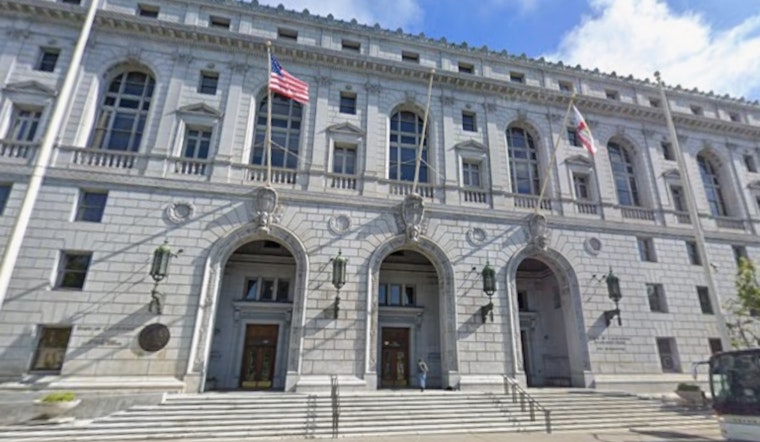
California's highest court has drawn a firm line on courthouse debt, ruling that judges cannot order low-income defendants to pay fines and fees they have no realistic way to afford. The decision covers a wide array of so-called user charges, including electronic monitoring costs, drug-program fees, and assessments that fund court facilities and operations. Going forward, judges must make a specific ability-to-pay finding before tacking on many non-victim costs, a shift that is expected to trigger resentencings and a wave of new hearings across the state.
The ruling and the case behind it
In People v. Kopp (S257844), the California Supreme Court held that criminal defendants must be treated similarly to civil litigants when it comes to certain court fees and that judges must consider a person's financial circumstances before imposing many ancillary charges, as outlined by the California Supreme Court. The majority treated many of these user fees as subject to equal-protection scrutiny and sent parts of the consolidated cases back to lower courts for resentencing and further proceedings. Released yesterday, the opinion replaces a patchwork of lower-court approaches to ability-to-pay questions with a single statewide standard.
Vote split, concurrences and dissent
The ruling came on a 6-1 vote, with Justice Carol Corrigan writing for the majority. Justice Goodwin Liu, joined by Justice Kelli Evans, filed a concurrence underscoring that prison wages often range from $0.16 to $0.74 an hour, a pay scale that can make even statutory minimum fines feel crushing for incarcerated people. A lone dissenter countered that the disputed fees represent a rational legislative response to rising court costs, according to the Los Angeles Times.
How the decision affects actual sentences
Applying its new standard to the cases in front of it, the court instructed trial judges to vacate or revisit charges that are effectively uncollectible or that no longer have legal support. One San Diego defendant who had been ordered to pay a $10,000 restitution-program fine along with dozens of add-on fees would, under the updated framework, see that total drop to roughly $415 in enforceable fines and fees, as reported by the San Francisco Chronicle. The high court directed trial courts to recalculate and, where appropriate, wipe out unpaid balances so they line up with the new opinion.
Advocates, public counsel and community groups react
Public-interest advocates quickly welcomed the decision as a long overdue correction to a system critics say has effectively criminalized poverty. The East Bay Community Law Center has described the old fines-and-fees regime as a form of "wealth extraction" that lands hardest on Black and Brown communities, and groups that litigated related cases are now urging lawmakers to build on the ruling, according to statements from the East Bay Community Law Center and Public Counsel.
What to expect next in courts and at the Capitol
On the ground, the ruling is likely to produce a steady stream of remands, resentencings, and ability-to-pay hearings as trial courts sort through older judgments and reset financial obligations. Counties that had already cut back or shut down certain fee programs may see fewer challenges, while state lawmakers are expected to revisit unfinished fines-and-fees reforms and related proposals, a trend highlighted in broader coverage by the Los Angeles Times.
Legal implications
The opinion leaves intact victim restitution payments that are ordered to compensate people who were harmed by crime, while drawing a sharp line between those obligations and punitive restitution fines that flow to the state. The court held that when judges set those punitive fines above the statutory minimums, they must do so with a clear eye on a defendant's ability to pay. The decision interprets and applies statutory provisions dealing with restitution fines and the clearing of uncollectible balances, and it lays out procedures trial courts must follow on remand, as summarized in the court's published opinion and related reporting on Justia.



