

























































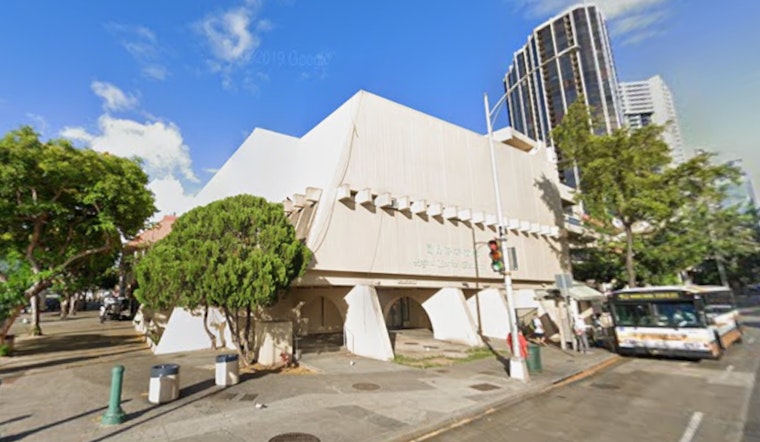
Honolulu Mayor Rick Blangiardi is asking for a serious assist from halfway across the Pacific, urging Taiwan’s president to help overhaul the four-acre Chinatown Cultural Plaza on Beretania Street. The decades-old complex, once pitched as a cultural centerpiece, is now described by the mayor as a crime-plagued eyesore. Blangiardi has floated tearing the whole thing down and rebuilding it as a fresh cultural and commercial hub, complete with a new name: “Taiwan Cultural Plaza.” It is an unusually direct appeal from a city leader to a foreign government over what is essentially a local property and public safety problem.
In a letter sent in March, Blangiardi pressed Taiwan President Lai Ching-te to step in, saying the property belongs to the Taiwanese government. According to the mayor’s office, Taipei later responded by asking who the proposed developers would be. “You don’t have a right to be a slumlord in our city,” Blangiardi told reporters, adding that city staff had already tried reaching Taiwan’s government through three different consuls general. As reported by Hawaii News Now, his pitch includes options like full demolition, leaseback deals and keeping the underlying land with the current owner while bringing in new developers.
Merchants and neighborhood leaders say the plaza’s decline is not subtle. They point to stairways and air-conditioning units caked in pigeon droppings, more than half of the mom-and-pop storefronts sitting vacant, and a marketplace that has withered to a single remaining vendor. “You can see that everything is falling apart,” Chu Lan Shubert-Kwock, president of the Chinatown Business & Community Association, told reporters. Anita Truong of Welcome Market told Hawaii News Now she expects to close up shop in two to three years after 28 years in business.
Who Controls The Plaza
The Chinatown Cultural Plaza identifies Longevity International Enterprises Corporation as its property manager and lists a management office at 100 North Beretania Street on the plaza’s official site. The complex still holds restaurants, jewelry shops and a parking facility, but online directories and business listings show plenty of empty units and dwindling foot traffic. The management page provides contact details for Longevity and confirms that the company is the on-site operator.
City Plans And Political Stakes
Blangiardi’s plea to Taipei lands in the middle of a broader push to revive downtown, including an expansion of a Downtown Business Improvement District that zeroes in on safety and cleanliness. Hawai‘i Public Radio reported on the BID’s growth and the administration’s larger downtown strategy, noting that Chinatown is especially complicated because of patchwork ownership and city-controlled parcels. The mayor has also met with Taiwan’s Honolulu representatives in official settings, according to Honolulu Sister Cities, underscoring that this is not just a land-use fight but a diplomatic balancing act as the city asks a foreign government to greenlight redevelopment.
Merchants Worry About Displacement, Safety Concerns Loom
Small merchants warn that a wholesale teardown could strip away Chinatown’s cultural identity and push out long-time vendors if protections and a concrete plan for existing businesses are not locked in from the start. Recent coverage of gunfire near the plaza last month drew attention to public-safety concerns that are driving the demand for change. Community leaders emphasize that any deal should include services addressing homelessness and crime, not just new buildings and renovated storefronts.
What happens next will depend on whether Taipei treats the project as a priority and identifies potential developers, and on whether any proposal can win over the community and clear city approvals. For now, the plaza stays open in its current, worn-down form while Taipei officials, property managers, local merchants and Honolulu leaders try to decide whether Chinatown’s aging complex gets a makeover or the wrecking ball.





