

























































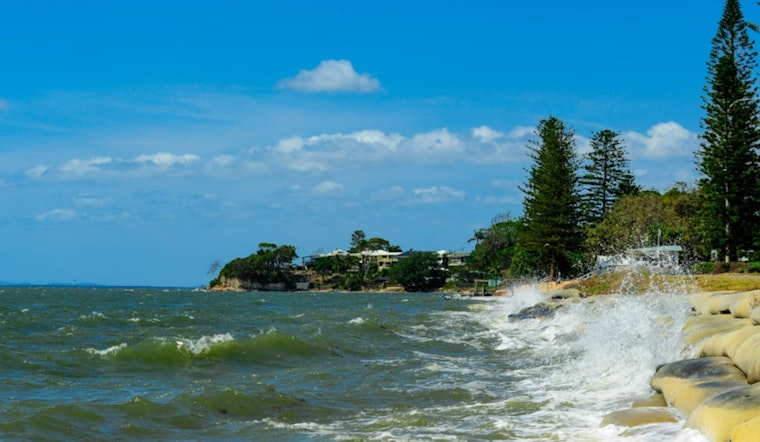
The familiar walk across the Dillingham Ranch polo fields to Mokulēʻia used to spill out onto a broad stretch of North Shore sand. Now it dead-ends at a maze of sand-filled fabric tubes, toppled trees and warning signs about guard dogs and trespassers. Between the temporary “burrito” erosion controls and a concrete seawall, a short section of what had been an open shoreline corridor is effectively off-limits, and neighbors say beachgoers are being pushed to trek miles to reach the nearest sand.
State officials say they are gearing up to take a closer look. In an email to reporters, Office of Conservation and Coastal Lands Administrator Michael Cain said staff “will conduct a site visit and open a formal investigation if we believe a violation has occurred,” as reported by Civil Beat. That report details sandbags, downed tree piles and warning signs that have turned a once-public path into a dead end.
State Law And The No‑Armoring Rule
Hawaii tightened its rules on shoreline hardening in 2020 with Act 16, which labels seawalls, sandbags, geotextile fabrics and “sand burritos” placed in the shoreline as a nuisance and gives state and county agencies clear authority to remove them and recover costs. The change folded those restrictions into the state’s coastal management objectives that treat sandy beaches as public trust resources, according to the Hawaii Revised Statutes. The law makes it harder for stopgap erosion fixes to quietly become permanent and spells out regulators’ power to order removal.
Enforcement Can Be Steep
The state has already tested that authority in some headline-making cases. In 2024, the Office of Conservation and Coastal Lands announced that two North Shore property owners had been ordered to pay nearly $1 million each over repeated unauthorized shoreline work involving burritos and an unapproved seawall. The enforcement action detailed fines for installing temporary measures, failing to take them out and continuing construction after being told to stop, with penalties that can rack up daily until the structures are gone. The department cast those fines as a tool to discourage shoreline armoring that chews away at public beaches, according to DLNR's OCCL.
Court Fights Often Follow Enforcement
Once the department moves to crack down, property owners often push back in contested case hearings and court appeals, sometimes stretching out the timeline for years. A long-running dispute over a Mokulēʻia seawall landed at the Hawaii Supreme Court, which took up procedural questions about where and how such appeals should be filed. The case shows how an enforcement order can trigger complex litigation that slows down removal and raises knotty jurisdiction issues, as described in the court’s March 2025 opinion on FindLaw.
What This Means For The Shoreline
Coastal scientists warn that shoreline armoring tends to cut off the natural flow of sand and can speed up erosion further down the coast, reshaping how people can use the shoreline and gradually shrinking public access. Reporting and research have documented how pieces of the North Shore, including parts of Mokulēʻia, have narrowed or lost sandy areas after hard structures were installed at the waterline. Those trends are laid out in reporting from the Honolulu Star-Advertiser.
How To Report A Suspected Violation
DLNR’s Office of Conservation and Coastal Lands says staff will visit Mokulēʻia and open an investigation if evidence points to a conservation-district violation, and the agency continues to accept tips and photos from the public, according to DLNR's OCCL. The department lists an enforcement tip line at 643‑DLNR, an OCCL office number at (808) 587‑0377, plus email and app options for submitting information. Neighbors and beach users with photos or precise location details are being encouraged to pass them along to state investigators.





