

























































San Jose is seeing crime numbers move in the right direction, at least on paper. Reported offenses across several major categories fell in 2025, extending a slide that started after a 2023 spike. Violent crime dropped sharply, property crime eased, and city leaders are quick to praise new high-tech policing tools even as civil-liberties groups warn the city is slipping into a surveillance state.
Numbers at a Glance
According to San José Spotlight, the FBI's Uniform Crime Report shows violent crimes in San Jose fell 15% to 4,963 in 2025, while property crime dropped 7% to 23,222. Reported rapes were down 27%, and motor vehicle thefts fell 17%. The city recorded 26 homicides last year, roughly the same total as in 2024.
Police Credit Real-Time Analytics
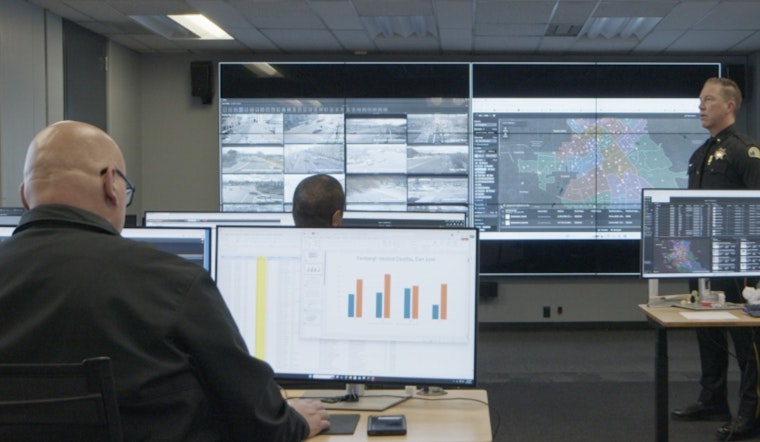
San José Police Department leaders say technology is a big reason for the drop. The department has expanded its network of automated license-plate readers and stood up a new Real-Time Intelligence Center, or RTIC, designed to help officers move faster on emerging threats.
In an advisory, the San José Police Department said tools such as Axon Fusus and the Peregrine platform let analysts pull together live video, body-camera footage, and reports in seconds to guide officers in the field. “The RTIC not only supports law enforcement but empowers the community to play an active role in safety,” Chief Paul Joseph said in the advisory.
Privacy Fight Heats Up
Not everyone is cheering the tech pivot. A coalition of civil-rights organizations led by the Electronic Frontier Foundation has sued San Jose over what it calls warrantless searches of automated license-plate reader records, the EFF says in its reporting.
The group’s analysis argues that searches of stored plate scans effectively create a detailed, searchable map of drivers’ movements and document millions of queries linked to dozens of agencies. The plaintiffs are asking courts to require warrants for ALPR searches and to mandate greater transparency about how long records are retained and how they are shared. The groups laid out their case in a detailed filing and in a December review.
Mayor Praises Progress; Advocates Push Back
City Hall is leaning into the success story. Mayor Matt Mahan called the 2025 numbers proof that “smart, tech-enabled policing” is working, according to San José Spotlight.
Community advocates are more cautious. Raj Jayadev of Silicon Valley De-Bug has warned that declining crime rates should not be used as a blank check to expand surveillance programs or increase police budgets without strong accountability measures. Analysts also note that changes in reported crime can reflect a mix of enforcement strategies, how comfortable people feel reporting offenses, and broader social and economic trends.
Part of a Wider Trend
San Jose’s improving numbers are not happening in a vacuum. The city’s declines mirror drops in other major California cities, according to reporting by the San Francisco Chronicle. The Chronicle has highlighted particularly steep decreases in San Francisco this year and noted that many large cities saw declines in both violent and property crime between 2023 and 2024.
Researchers say local tactics, including how departments deploy officers and technology, matter a lot, but they are only one piece of a larger regional and national pattern that is still being studied.
National Recognition
San Jose’s relatively low crime rates have also drawn attention from outside California. A study by SmartAsset last year ranked the city the safest of the 50 largest U.S. cities, based on a mix of violent and property crime rates and other safety metrics.
The ranking underscores that San Jose’s overall crime counts compare favorably to many peer cities, even as neighborhood-level hot spots and disparities persist. City officials say the recognition pairs with ongoing community programs focused on violence prevention and intervention.
What’s Next
Turning one year of better news into a long-term trend is the harder part. Experts say it will require steady investment in prevention programs, police staffing, and robust oversight of powerful surveillance tools.
A fact sheet from the Public Policy Institute of California notes that law-enforcement staffing in the state remains below earlier levels, a factor that can influence crime trends over time. Both city leaders and civil-rights groups say they will be watching upcoming data releases and court rulings closely as San Jose figures out how to keep crime trending downward without sacrificing civil liberties.




