

























































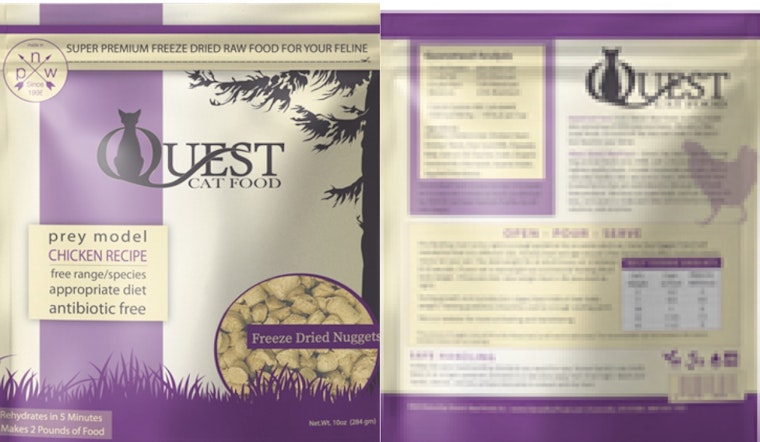
Go Raw LLC, based in Cottonwood Heights, has pulled a single lot of its Quest Cat Food Chicken Recipe freeze-dried nuggets after testing suggested the batch may be low in thiamine (vitamin B1). The voluntary recall covers 10-ounce beige zip-lock bags labeled with Lot C25288, a Best Buy date of Oct. 15, 2027, and UPC 6-91730-18103-1. The company says one cat connected to this lot was treated by a veterinarian and has recovered. The recall was announced on Tuesday.
Recall details and distribution
According to the U.S. Food and Drug Administration, product from this lot tested below the required thiamine levels for a complete feline diet, triggering a voluntary recall limited to that single batch. The notice lists the affected product description and reports that the lot was distributed through retail stores in Colorado, Utah, Washington, Oregon, Pennsylvania, Rhode Island, Michigan, California, Texas and Illinois. The FDA has also posted photos of the beige bag with a purple stripe so cat owners can double-check their shelves.
What owners should do
Anyone who has a bag from the affected lot is being asked to stop feeding it immediately and return it to the place of purchase for a full refund. Customers with questions can contact Go Raw by email at [email protected] or by phone at 801-432-7478. As reported by Cleveland.com, the company launched the recall after receiving a report of a potential illness tied to the product, and Go Raw says it has put additional safeguards in place to avoid similar problems in future production runs.
Symptoms to watch for
Thiamine deficiency in cats can start subtly, with signs such as decreased appetite, drooling, vomiting and weight loss. If it worsens, it can progress to neurological problems, including ventroflexion (a downward bend of the neck), an unsteady gait, changes in vision or even seizures if it goes untreated. Veterinary references like the Merck Veterinary Manual and VCA Animal Hospitals note that prompt thiamine supplementation usually leads to improvement, so owners who suspect a problem are urged to contact their veterinarian quickly.
Why this matters
Small-batch and raw pet foods have drawn extra scrutiny in recent years after a series of unrelated incidents led to federal investigations and recalls. Those cases have prompted veterinarians to warn about both contamination issues and nutritional gaps in minimally processed diets. National coverage from the Associated Press has tracked those episodes and the regulatory responses that followed.
Company response
Go Raw says the recall began after a veterinarian submitted product from the lot for testing, which revealed the thiamine shortfall, and that follow-up analysis led the company to implement corrective measures in its process. National reporting notes that the recall is voluntary and restricted to that single lot. The company is offering refunds and has shared photos and lot details through its customer-service channels, according to Newsweek.
If you have Quest Cat Food at home, check the lot code on the front of the bag and stop feeding Lot C25288. If your cat is showing any concerning symptoms, call your veterinarian, and if the animal has already been treated, ask the clinic to report the case to the FDA. Both the agency’s recall page and Go Raw’s customer-service contacts may be updated if new information comes out.





