

























































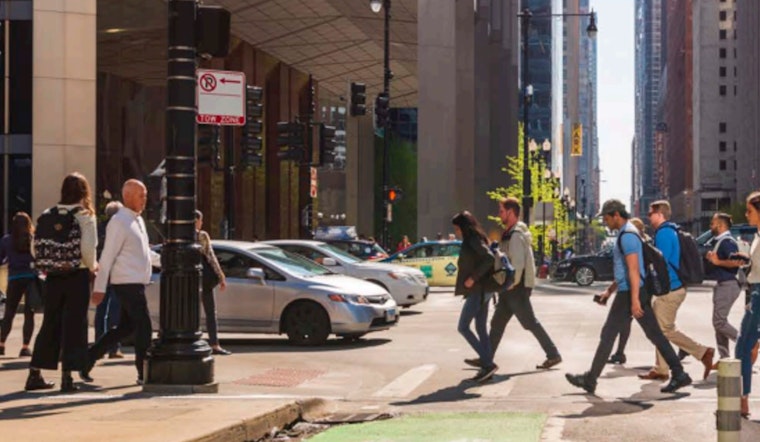
Traffic deaths in Chicago fell to a nine-year low in 2025, even as the city prepares to dial back the money that helped make streets safer. Officials recorded just 100 traffic fatalities in 2025, the fewest since 2016 and a sharp drop from the pandemic-era peak of 186 deaths in 2021. The downturn lines up with a flurry of street redesigns, including protected bike lanes, bus boarding islands and pedestrian refuge islands. But advocates and several alderpeople say the city is about to test how far safety gains can stretch on a shrinking budget.
City data shows the engineering push has been substantial. According to the Chicago Department of Transportation, the agency installed more than 90 miles of bikeways and bus lanes and more than 2,100 refuge islands, curb extensions and raised crosswalks in 2024-2025. Serious injuries are now at their lowest level since 2012, and CDOT points to those quick-turn projects and its Vision Zero planning as a core reason severe crashes are falling across the city.
Funding cuts threaten to reverse gains
The celebratory numbers come with a catch. As reported by Block Club Chicago, the roughly 100 traffic deaths recorded in 2025 mark the lowest total in nearly a decade, yet the city is also planning to pare back the locally controlled bond funds that have powered many of those safety upgrades. Ald. Daniel La Spata and other critics argue that sporadic or one-off allocations cannot replace the steady stream of flexible bond dollars that paid for much of the neighborhood-level work.
Neighborhood work drove the drop
CDOT’s own analysis suggests the steepest improvements came where the department concentrated on the High Injury Network and corridors on the West and South sides. In its annual crash report, the agency links reductions in deaths and serious injuries to specific on-the-ground fixes, such as protected bike lanes, bus bulbs and shorter pedestrian crossings that lower vehicle speeds and cut exposure for people walking and biking. According to the Chicago Department of Transportation, those investments helped push traffic fatalities and severe injuries down in several neighborhoods.
Why bond dollars matter
The fight now is less about design and more about how to keep paying for it. A key sticking point is the amount of locally controlled bonding available for small, fast-moving safety projects. Reporting by Streetsblog Chicago shows the city’s 2025-2029 Capital Improvement Program projects a steep decline in bond support for Complete Streets and Vision Zero work, and that a December bond authorization routed only about 7.3 million dollars to CDOT. Advocates say that figure is far below what is needed to maintain the current pace of neighborhood installations.
Advocates press for preserved funding
Transportation and safety groups warn that smaller, piecemeal funding packages will not match what a reliable pipeline of local bonds provided. “The 7.3 million and 12 million totals are not enough to replace lost funding,” Active Transportation Alliance staff told Block Club Chicago, and Ald. Daniel La Spata has cautioned the fatality rate could plateau without continued investments. Campaigners are urging the city to restore flexible bond lines and to explore dedicating automated-enforcement revenue specifically to crash-prevention efforts.
That leaves City Council and the mayor’s office with a familiar but high-stakes budget trade-off: keep funding flexible, locally controlled tools that let CDOT move quickly on high-injury corridors, or lean more heavily on slower, more restricted funding sources. The choice will go a long way toward deciding whether Chicago can hold on to the safety gains it has recorded over the past several years or whether the streets once again tip in the wrong direction.





