

























































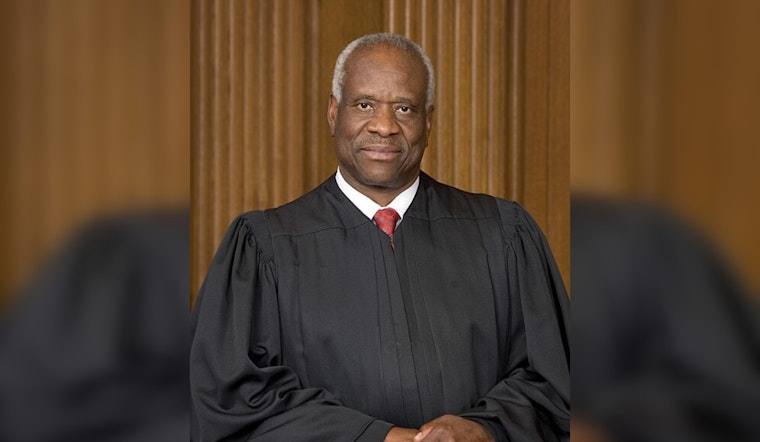
Supreme Court Justice Clarence Thomas pulled out of a planned in-person appearance at a private legal conference at American University’s law school this week, citing a security risk that he said left him no choice but to stay away. Instead of taking the stage, Thomas joined the closed-door session remotely from a Capitol Hill office, telling attendees, "I apologize for having to change things, but I wanted to make sure I didn’t endanger anyone by my mere presence."
Security scare keeps Thomas off campus
A recording of Thomas’ remarks, obtained by The New York Times, shows the justice saying he had intended to attend in person but changed plans because of a security risk. His comments came as part of a broader, candid conversation about political polarization and the rising level of threats aimed at judges.
Closed-door legal crowd, no press allowed
The event, hosted by the J. Reuben Clark Law Society at American University, was billed as an award ceremony and conversation that drew academics, high-profile lawyers, leaders from The Church of Jesus Christ of Latter-day Saints and Trump administration veterans including U.S. Trade Representative Jamieson Greer, according to The Associated Press. Organizers told attendees in advance that the session would be closed to reporters.
Protesting students stay outside the room
While Thomas spoke from a secure office across town, roughly a dozen students gathered outside the law-school building, holding signs that read "No Kings" and passing out a one-page sheet quoting excerpts of Anita Hill’s testimony from Thomas’ 1991 confirmation hearing. It remains unclear whether that modest demonstration was related to the security concern that led to Thomas’ last-minute change of plans, The Salt Lake Tribune reports.
Rising threats reshape how justices show up
The episode highlights how heightened threats and deep political friction have reshaped public appearances for federal judges. All nine justices received increased security after the 2022 leak of a draft opinion overturning Roe v. Wade, and threats against judges have risen since then, according to The Associated Press. The Supreme Court typically declines to comment on specific security arrangements.
Thomas laments polarization as tenure milestone looms
During the discussion, Thomas used the moment to lament growing polarization and the erosion of everyday interactions that once kept justices more grounded in civic life. At 77, he is the court’s oldest member and could surpass the 36-year mark for longest-serving associate justice if he remains on the bench through spring 2028, The Salt Lake Tribune notes.





.jpg)