

























































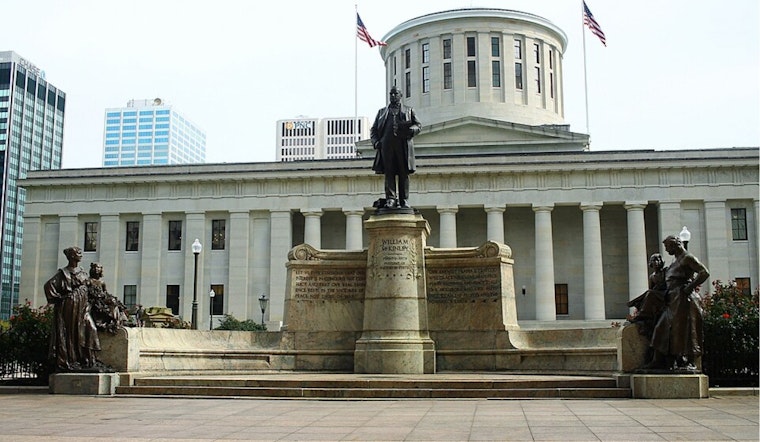
At the Ohio Statehouse, Republicans are locked in a very public family fight over two sweeping crime bills that would, for the first time, create a statewide hate crime statute and crank up penalties for politically motivated violence. The core dispute: which groups get named in law, whether political affiliation belongs alongside race and other traits, and how much a criminal's motive should change the punishment.
What Is In The Bills
House Bill 306 would set up Ohio's first Hate Crime Act, making it a crime to terrorize someone because of certain listed characteristics and giving victims a new private right to sue, including the option of a civil fine of up to $25,000, according to the bill text on the Ohio Legislature. The bill spells out protected categories that include political affiliation, race, sex, national origin, ancestry, age, familial status, military status and disability, and it treats knowingly false reports intended to trigger an armed police response as a form of intimidation. Ohio already has an ethnic intimidation law that bumps certain offenses to a higher degree if they are motivated by race, color, religion or national origin, but it still does not have a standalone hate crime statute, as outlined in Ohio Revised Code §2927.12.
Who Is Pushing The Measures
The two bills are co-sponsored by Rep. Dontavius Jarrells, a Democrat from Columbus, and Rep. Josh Williams, a Republican from Sylvania. They argue that current law leaves too many gaps and too many victims without meaningful remedies. Williams, who told reporters he has been targeted with racial slurs since taking office, framed the push in personal terms, saying, "Look, as a Black man in America," and calling the proposal "about closing loopholes which hateful individuals use to terrorize our communities," as reported by News 5 Cleveland.
Where Republicans Split
The real fireworks have been inside the committee room. Some Republicans argue that carving out special penalties based on motive is a step too far. "Why do we care? The offense is the same?" asked GOP Rep. Brian Stewart, voicing concerns that motive-based enhancements create unequal outcomes for the same underlying conduct, according to News 5 Cleveland.
The bill also leaves out two words that have become political lightning rods: "sexual orientation" and "gender identity." LGBTQ advocates blasted that omission as "naive and short-sighted," arguing that it ignores the people most often targeted, in coverage by The Buckeye Flame. Supporters of clearer protections point to federal precedent and research showing that transgender people face significantly higher rates of violent victimization, citing findings from the Williams Institute.
Hard Penalties And Politics
Running alongside the hate crime bill is House Bill 457, which focuses on political violence. The measure would add new aggravated murder offenses tied specifically to political motivation and would require courts to treat a victim's political affiliation or status as an elected official as an aggravating factor when imposing a sentence, according to the bill text on the Ohio Legislature. Backers say those changes are meant to discourage attacks on public officials and others targeted for their politics. Critics warn that layering politics into sentencing risks uneven application, and national tracking shows a broader trend this year of bills that expand death penalty eligibility and aggravating factors in several states, including Ohio, according to the Death Penalty Information Center.
Threats To Officials Fuel The Push
Lawmakers backing the bills are not shy about pointing to recent scare stories to make their case. In May, the Justice Department charged a New Albany man who allegedly mailed dozens of threatening letters to public officials, many containing white powder and one containing a bullet, according to a press release from the U.S. Department of Justice. In a separate July incident, federal agents arrested a Dayton man accused of leaving a voicemail that threatened to kill a congressman, documented in another release from the U.S. Department of Justice. Sponsors say those cases show that political threats are not just internet bluster.
What Comes Next
For now, both measures are parked in the House Judiciary Committee, which will decide whether to schedule additional hearings, advance the bills as written or start carving them up with amendments. The committee's membership and upcoming meetings are listed on the Ohio House Judiciary Committee page. Given the open rift over how far to go on protected classes and penalties, insiders expect any version that reaches the House floor to look different from what is in front of lawmakers today.
Legal Implications
If HB 306 makes it into law, victims would gain a new civil path that includes potential attorney fee awards and a civil fine capped at $25,000. HB 457, for its part, would change how political motive is treated at the charging and sentencing stages for violent crimes. Together, those shifts could alter how prosecutors file cases, how defense attorneys approach plea bargaining and how judges weigh aggravating factors, leaving courts and prosecutors to sort out the constitutional and enforcement questions that follow.





.jpg)