

























































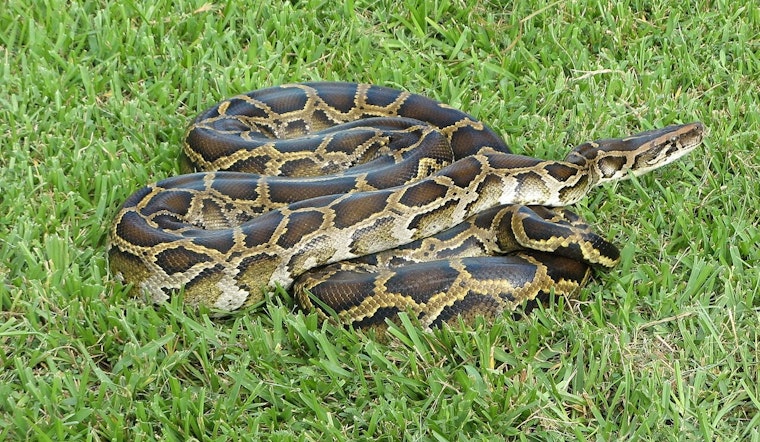
WFLA reporter Amanda Holly was not content to just talk about Florida's python problem from the safety of the studio. On Tuesday, she waded into a patch of sawgrass near Naples and helped haul a Burmese python out of the Everglades, all while the cameras rolled. The up-close catch was a vivid reminder that nonnative constrictors are still very much on the move across South Florida's wetlands.
As reported by Spot On Florida, which reposted the original WFLA segment, Holly and her guides tracked down and removed the snake during a filmed outing. The write-up noted that Burmese pythons are considered "unwanted" in the Everglades and repeated a figure cited in the broadcast of roughly half a million snakes slithering through the ecosystem. The clip has been bouncing around local feeds, putting a very public face on what is usually the gritty, behind-the-scenes work of python removal crews.
Scientists Say the Threat Is Real
Researchers have long warned that Burmese pythons are reshaping parts of the Greater Everglades by preying on almost anything they can swallow. The National Park Service notes that these large constrictors feed on a wide range of native mammals, creating serious ripple effects through the food web.
A landmark study published in the Proceedings of the National Academy of Sciences documented steep declines in raccoons, opossums and bobcats in areas where pythons had become established. Federal researchers at the U.S. Geological Survey have even documented pythons consuming deer, and they point out that estimating a statewide population is notoriously difficult because the snakes are so cryptic and hard to detect.
How Florida Fights Back
Florida is not leaving the battlefield to the snakes. State and federal agencies rely on trained contractors and everyday residents to help remove pythons, from the PATRIC contractor program to the annual statewide hunt known as the Florida Python Challenge. The Florida Python Challenge lays out the registration steps, training requirements and carcass turn-in process for competitors, while the Florida Fish and Wildlife Conservation Commission describes how its PATRIC teams fan out across public lands to pull snakes from the landscape.
Wildlife managers say these efforts help ease local pressure on native animals, even if nobody expects a quick fix. Long-term control, they stress, will depend on steady removal work, ongoing research and a watchful public that knows what to report and when.
Park and wildlife officials are clear about one thing: they do not want untrained people trying to wrestle big constrictors on their own. Members of the public are urged to report sightings to rangers or local authorities so trained teams can respond safely. Holly's segment might make for flashy television, but experts say it also captures the daily reality facing Everglades biologists and python hunters who are out there, night after night, trying to keep the snakes in check.



.jpg)