

























































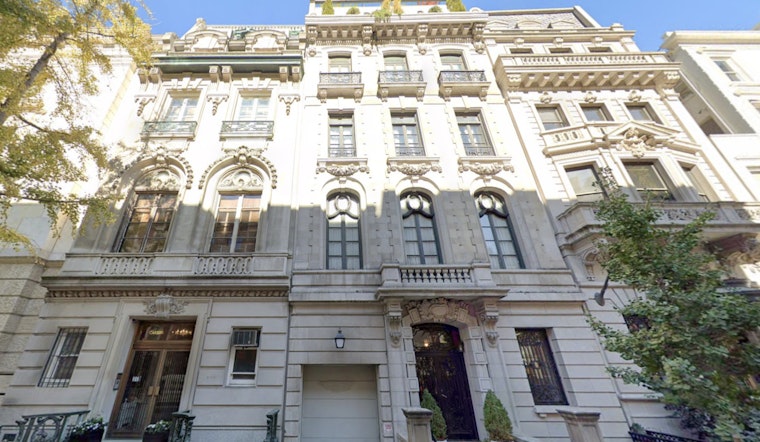
The long-running saga of 15 East 63rd Street on the Upper East Side looks like it is finally nearing an end, with a top bankruptcy bid of $34.5 million on the table for the Gilded Age townhouse once tied to fashion designer Oleg Cassini.
The offer, submitted by an entity identified in court filings as 15 East 63rd Street, LLC, is set to go before a federal bankruptcy judge this week. If approved, the sale would help satisfy more than $30 million in liens and mortgages attached to the property and would mark a turning point in years of litigation that included a forcible eviction in 2024 and repeated courtroom clashes over who actually controlled the house.
About the house
The limestone Beaux-Arts townhouse was built in 1901 and clocks in at roughly 18,000 square feet, with about 20 rooms and a trove of original details that survived decades of use. Inside, there are multiple fireplaces, ornate plasterwork and grand formal spaces that recall the building’s Gilded Age origins.
According to Business Insider, the property’s asking price has been steadily ratcheted down, from a $65 million listing in 2024 to a Brown Harris Stevens re-listing at $39.5 million, and finally to the current $34.5 million purchase agreement. The house has long been associated with Oleg Cassini, who used portions of the building as an atelier decades ago.
Trustee moves and the stalking-horse bid
Chapter 11 trustee Albert Togut has asked the court to bless a sale structure that would lock in the $34.5 million offer as a stalking-horse bid and set a $34.1 million back-up. His filings also seek to shield the transaction from transfer taxes as part of the bankruptcy process.
As reported by The Real Deal, Togut shifted the listing to Brown Harris Stevens after a stint with Sotheby’s failed to produce what he viewed as serious buyers and has signaled that he expects the court to sign off on the process. That same filing is what allowed the stalled sale effort to restart after months of competing creditor claims and procedural delays.
Courtroom fights and the eviction
Court documents show the mansion became the focus of an adversary proceeding inside the bankruptcy case, which eventually produced an order directing that control of the property be turned over to the trustee. When that did not happen voluntarily, the court authorized the U.S. Marshals Service to remove remaining occupants so the house could be properly marketed to buyers.
The judge’s written decisions and related filings outline a dense tangle of liens, looming foreclosure threats and a complicated ownership history that had to be untangled before a sale could move forward. Those materials, included in the case docket, describe how the court spent months parsing competing claims to the property. During one hearing, Marianne Cassini told the judge she had been forced out of the townhouse “in a robe,” according to coverage of the proceedings.
What the buyer inherits and the work ahead
Whoever emerges as the ultimate buyer will inherit an unusually intact period interior, including marble staircases, a wood-paneled library and elaborate drawing rooms that still look the part of an early 20th-century mansion.
They will also inherit decades of deferred work. Brokers and members of the buyer’s team have warned that any full restoration will be both expensive and slow, and officials involved in the sale have noted that the building will almost certainly need a multi-year program of permitting and renovation before it can function comfortably as a single-family home again. That combination of cost, complexity and landmark constraints has helped limit the pool of would-be buyers willing to pay top dollar throughout the protracted sale effort.
From $65 million to $34.5 million
The mansion’s steep price drop is a product of both the broader market and the cloud of legal and practical headaches that have hovered over it, including lender liens and the anticipated cost of reviving a landmarked property of this scale.
The Real Deal detailed the trustee’s sale filings and the switch in brokerage that followed months of frustration with the earlier marketing push. If the judge approves the current deal, the proceeds will flow to creditors under the bankruptcy plan, and the buyer will be free to pursue whichever restoration or conversion strategy they choose.
For Upper East Side real estate watchers, the outcome will serve as a test of whether landmarked Gilded Age townhouses can still approach their pre-litigation values once years of legal wrangling and needed repairs are factored in. The court’s review this week will determine whether this chapter in the Cassini townhouse story finally wraps up or whether yet another twist in the case is still waiting in the wings.





