

























































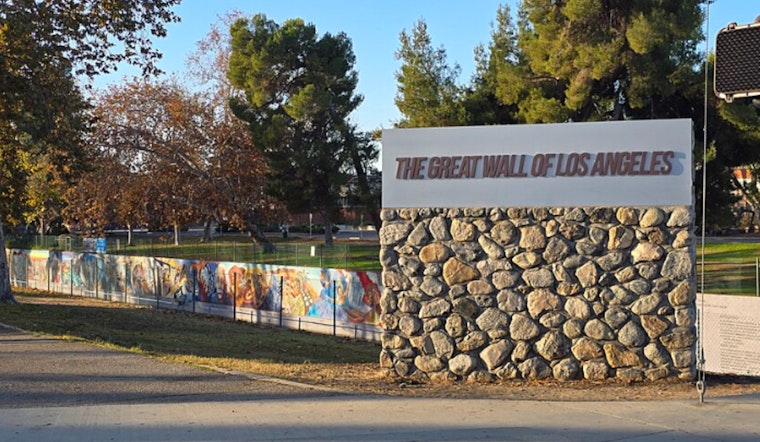
Judy Baca is pushing back hard against allegations from former employees that she personally profited from the high-profile expansion of the Great Wall of Los Angeles, insisting the project is being run to serve communities and stay on schedule. At the heart of the dispute is how money and staff time were handled inside the Venice nonprofit she co-founded, the Social and Public Art Resource Center (SPARC). Baca and current SPARC leaders say critics are misreading long-standing practices around commissions and fiscal sponsorship.
Former Staff Raise Questions About Assignments and Pay
According to the Los Angeles Times, roughly 10 former SPARC employees, including two managers, say they were assigned work that appeared to benefit Baca’s private practice, Judy Baca Inc., while also working on Great Wall projects. Former Great Wall Institute director Pete Galindo and former executive director Carmen Garcia told the paper they saw pay and assignment irregularities and raised concerns over how grant-funded staff time was used. SPARC board chair Zojeila Flores and Baca denied any wrongdoing and characterized the complaints as coming from disgruntled staff members.
The Grant Behind the Scrutiny
The expansion effort was supercharged by a 2021 award from the Andrew W. Mellon Foundation: a $5 million grant to support preservation, activation, and extension of the mural, according to the Andrew W. Mellon Foundation. The money was awarded through Mellon’s monuments initiative and earmarked for research, community engagement, fabrication, and public access improvements over multiple years. That infusion allowed the Great Wall Institute to scale up and created more paid staff roles tied directly to the project.
How the Expansion Is Being Run
On SPARC’s own website, the Great Wall Institute is described as the program responsible for extending the mural along the channel, to grow the work to about a mile by the 2028 Summer Olympics, while pairing research with training and production. Portions of the expansion have been staged and reviewed at SPARC-affiliated spaces, including SPARC at Bergamot Station, and the organization has spotlighted recent infrastructure upgrades meant to improve public viewing. SPARC says the Institute is designed to advance both historical scholarship and hands-on mural-making techniques.
Archives Sale and Money Questions
Another flashpoint has been the 2021 sale of more than 350 archival items related to the Great Wall to the Lucas Museum of Narrative Art and how much of that deal, if any, flowed back to the archive’s owner, according to reporting by the Los Angeles Times. Sources close to SPARC told the paper the archive sold for about $1.5 million. SPARC’s chair told The Times that Baca, as owner of the archive, donated $521,000 from the sale back to SPARC. The museum declined to publicly discuss the purchase price when asked.
What Public Records Show
Public filings and nonprofit data summaries indicate SPARC’s revenues climbed after the Mellon award and list modest rental income for the organization, about $64,991 in 2024 and $57,590 in 2023. Nonprofit filings compiled by CauseIQ and SPARC’s posted Form 990s also identify Dr. Judith F. Baca as SPARC’s artistic director and CEO, with reported compensation of about $236,149 for 2023 and $211,004 for 2024. Those records reflect the larger budget scale that came with high-profile grants and exhibitions.
What’s Next
SPARC and Baca have stressed that work on the Great Wall and related exhibitions is continuing and that the organization remains focused on community programs and youth training, according to SPARC’s website. Former employees who have spoken to coverage say they want clearer accounting and an independent review of how grant dollars and staff time were allocated. Supporters of Baca counter that her leadership over decades has opened doors for artists and students across Los Angeles. With the mural expansion and viewing bridge now in place, the fight has shifted away from the art on the concrete and toward governance, transparency, and the question of who ultimately benefits from a landmark public project.





