

























































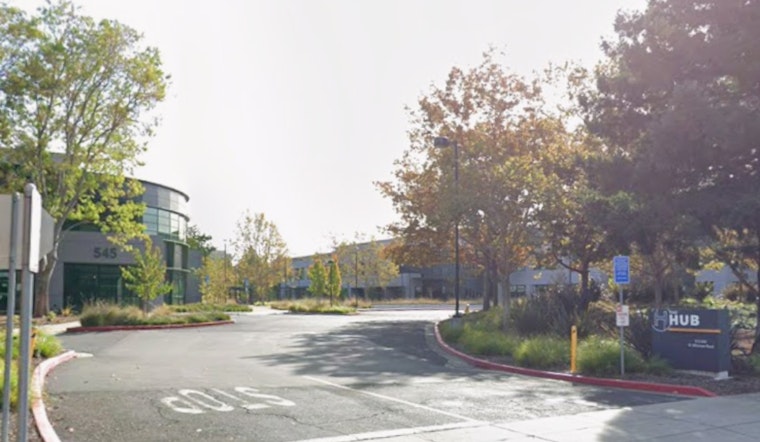
Mountain View’s Environmental Planning Commission signed off 6-0 on Feb. 4 on a proposal to bulldoze two office buildings and a surface parking lot in favor of a 195-unit rowhouse development at 515 and 545 N. Whisman Road. The plan calls for roughly 30 three-story rowhouse buildings lining the east side of North Whisman, each with three- and four-bedroom homes, attached two-car garages, and a small public minipark. Commissioners welcomed the prospect of more for-sale housing but kept circling back to affordability, tree loss, and environmental safeguards as major worries.
What the plan includes
According to the Mountain View Voice, the developer has agreed to reserve 46 below-market-rate ownership units, with 28 targeted to moderate-income buyers and 18 set aside for above-moderate households. The development team argues the project would meaningfully expand Mountain View’s small stock of for-sale BMR homes.
In Santa Clara County, the median income for a three-person household is about $175,700, according to the California Department of Housing and Community Development. Commissioners pointed to that figure as a sign of just how tight the ownership market has become and why they want more attainable for-sale options. Developer representatives told the commission these units would come in at price points below what typical single-family homes command in Mountain View.
Site history and safety
The site sits within the long-standing Middlefield-Ellis-Whisman (MEW) remediation area, where the U.S. Environmental Protection Agency says decades of cleanup work have targeted historic soil and groundwater contamination. The EPA has overseen remedies and, in some cases, third-party cleanup agreements intended to reduce vapor-intrusion and groundwater risks so properties in the MEW area can be reused with protections in place for future residents and workers.
Tree removals, waivers and misgivings
City staff reports cited by the Mountain View Voice identify 335 trees on the combined parcels, including 151 on-site heritage trees. The developer plans to remove all non-heritage trees and 139 of the heritage trees, then plant roughly 440 new trees as replacements.
Several commissioners said they were taken aback by the number of waivers the applicant requested to loosen standards such as floor-area ratio and site coverage. Some also bristled at the decision to cluster most of the BMR homes in one portion of the project instead of dispersing them more evenly across the site. City staff and the developer maintain that the proposed landscaping and mitigation measures are designed to restore the tree canopy over time, but commissioners pushed for more mature plantings and design tweaks where possible.
How state law shapes the trade-offs
Throughout the discussion, commissioners kept returning to California’s Density Bonus Law, which gives projects that include affordable units the ability to seek concessions, incentives, and waivers. The law is codified in the state’s Government Code and published online by the California Legislature. That framework sharply limits how far Mountain View can push back when a qualifying project asks for extra flexibility.
In the end, the commission agreed to adjust the city’s usual requirement that BMR units be spread throughout the development in order to line up with the density bonus requests the developer is entitled to make under state law.
What happens next
The commission’s vote is a recommendation, not a final sign-off, so the rowhouse project now rolls into the next stage of Mountain View’s review process. The proposal will still have to clear detailed design review, environmental scrutiny, and standard permitting before any construction equipment shows up on North Whisman Road. City planning staff will continue working with environmental regulators on remediation and long-term monitoring requirements as the developer moves through the remaining approvals.





