

























































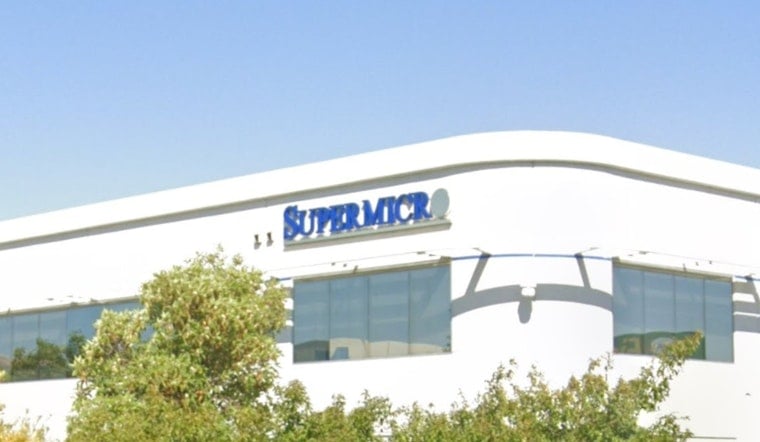
Super Micro Computer is planting a much bigger flag in North San Jose, announcing today that it will move into a new industrial campus spanning roughly 32.8 acres and more than 714,000 square feet. The company says the site will support advanced system design, manufacturing, testing and global distribution for its AI building-block products and could create hundreds of engineering, manufacturing and business jobs. The expansion is set to become Supermicro’s largest U.S. operation and pushes the company’s Silicon Valley presence to a new scale.
In a press release distributed through PR Newswire, Supermicro described the development as its largest U.S. campus and said the facilities will accelerate the delivery of its Data Center Building Block Solutions for AI customers. "This new DCBBS campus, which becomes our largest in the U.S., is a direct investment in American innovation and manufacturing leadership," company CEO Charles Liang said in the release. Supermicro said the expansion will grow its regional footprint to nearly 4 million square feet once the campus is fully occupied.
The campus is located in the Qume Drive and Commerce Drive industrial cluster in north San Jose, with planning and property records pointing to parcels at 2222 and 2350 Qume Drive and 2150 Commerce Drive. Developer materials and brokerage listings put the assembled project at roughly 714,491 square feet and describe Class A industrial features geared to advanced manufacturing, including high clear heights and heavy electrical capacity. Those specifications appear on the Kurv Industrial project page and in commercial brokerage listings for the Bridge Point and Kurv development.
San Jose Mayor Matt Mahan, quoted in the company’s announcement, praised the deal as a boost to the city’s role in the global AI economy. Supermicro said the facilities will support advanced system design, manufacturing, testing and service while creating hundreds of U.S.-based positions across engineering, production and corporate functions. The company framed the campus as a key piece of its strategy to speed domestic production of AI infrastructure.
What It Means for North San Jose
Alongside the promise of new jobs and tax revenue, the project drops straight into San Jose’s ongoing debate over power use and industrial land as the city courts large energy-hungry users. Residents and community groups have already pushed back on plans to fast-track data centers and other heavy-power projects without more public engagement, citing concerns about the electric grid and environmental impacts. City staff, for their part, say each individual project will still go through environmental review and public hearings under existing rules, according to the San José Spotlight.
Timeline and Site Details
Developer materials list the Kurv and Bridge complex as completing in the first quarter of 2026, and current commercial listings break out individual building footprints and availability, including a roughly 202,735-square-foot building at 2150 Commerce Drive. Listings also highlight 32 to 36 foot clear heights, LED lighting and substantial minimum amp electrical service for each building, a set of specs aimed squarely at advanced manufacturing tenants. Those project pages and brokerage listings provide the site-level details that align with the company’s announcement, per Kurv Industrial.
Where This Fits in Supermicro's Local Push
Supermicro has been steadily expanding across San Jose for years, including its purchase of the 19.7-acre former Fry's Electronics site on East Brokaw and filing plans for a campus there. Local reporting and earlier company releases show Supermicro ramping up Silicon Valley production capacity to keep pace with demand for AI infrastructure, making the Qume and Commerce campus the latest piece of that strategy. The move further concentrates advanced manufacturing and distribution work in North San Jose.
Supermicro and city officials say more operational details will roll out as leases and build-outs are finalized, while city planners continue to vet permits and community outreach. For now, the announcement locks in another major industrial shift in North San Jose as the city weighs the economic upside of AI infrastructure against worries about grid capacity and neighborhood impacts.





