

























































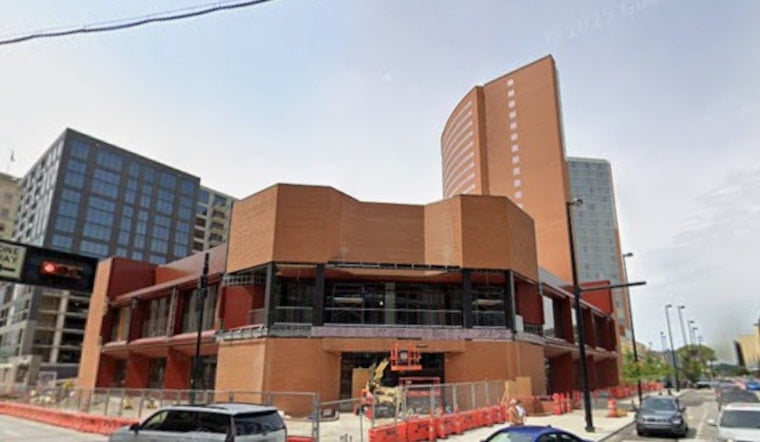
Paycor, the Cincinnati-born payroll and human capital management company, has officially opened a new downtown headquarters on the second floor of the former Saks Fifth Avenue building near Fountain Square. Instead of stuffing the floor with full-time desk workers, the company is using the space as a hub for training, corporate events and visiting employees. The move caps a multi-year effort to revive the long-vacant Saks shell and is being treated as one of the biggest private bets so far on bringing daytime energy back to the Convention District.
What Paycor's Downtown Hub Will Look Like
According to 3CDC, Paycor will occupy nearly 40,000 square feet on the second floor of the renovated 80,000-square-foot building at 101 W. Fifth Street. The $30 million conversion added a new glass façade, upgraded mechanical systems and ground-floor space that can hold retail and a restaurant. Construction wrapped in December 2025, and 3CDC said an official ribbon-cutting was scheduled for Tuesday. The developer says Paycor’s floor is set up with flexible workstations and gathering rooms that can host more than 500 people for training sessions and corporate events.
From Norwood To Fountain Square
Paycor’s new downtown footprint is a clear downsize from its Norwood campus, where the company moved into a 136,000-square-foot office on Montgomery Road in 2014. As WCPO reported, Norwood recently terminated an incentive agreement after a contractual dispute, and Paycor agreed to repay the city $2.25 million in installments through 2027. Company leaders have described the transition as part of a “virtual-first” strategy that keeps strong Cincinnati ties while cutting back on real estate costs.
A Paychex Company, But Staying Local
Paycor was acquired by Paychex in a transaction valued at roughly $4.1 billion, according to the buyer’s announcement. The companies said they would continue to operate independently while they integrate services, and Paychex framed the deal as a way to expand its up-market technology offerings. The Cincinnati Enquirer reported that Paycor had about 2,900 employees at the time of the acquisition, with nearly half based in the Cincinnati region, a figure local officials point to when pressing for a visible downtown presence.
Restaurants And Street Life
Developers carved out roughly 13,000 square feet on the first floor for a restaurant, and Chef Jose Salazar’s namesake spot, Salazar, is set to take part of that footprint beneath Paycor’s offices. Local coverage has suggested that pairing a major office user upstairs with a well-known chef downstairs should help wake up the block. WLWT reported that the restaurant will sit directly under the new offices and that the overall conversion is intended to better connect Fountain Square with the Convention District. City and business leaders have welcomed the mix of tenants as a practical way to lure lunchtime crowds and evening diners back into the core.
Legal And Local Politics
Loose ends remain from Paycor’s time in Norwood. The city council canceled a 15-year incentive agreement after finding the company had outstanding obligations, and the termination ordinance calls for four payments of $562,500 through 2027, according to WCPO. It is still not clear whether the Norwood campus will be repurposed or sold, and Paycor says the downtown hub is meant to complement, not replace, its broader regional operations. That repayment plan, paired with the company’s virtual-first stance, underscores the bind cities face when high-profile employers shrink their physical footprint but keep their names tied to the region.
For now, Paycor’s move turns an empty retail landmark into an office and events anchor that developers hope will pump some weekday life back into the middle of downtown. Officials say the new headquarters will see regular use for training and gatherings, and Tuesday’s ribbon-cutting is expected to offer an early read on whether the strategy will pull in steady foot traffic. In the months ahead, the open question is whether Paychex keeps a significant share of Paycor’s operations in Cincinnati or consolidates roles elsewhere, a decision that carries real economic weight for the city.





