

























































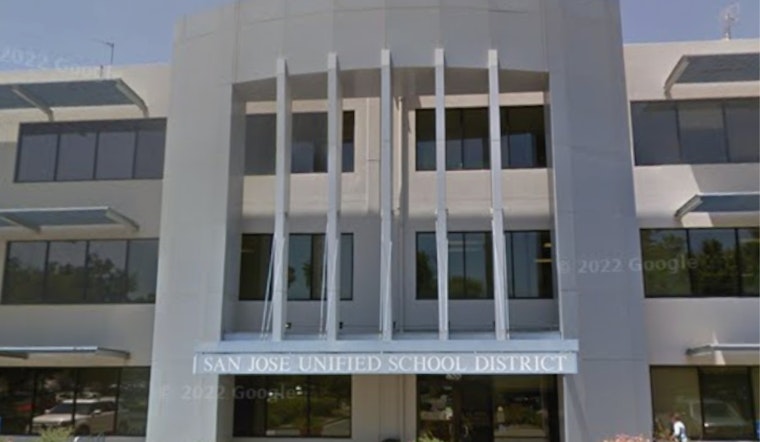
San Jose Unified families could be sending their kids to very different schools in the next few years, as district leaders float plans that would consolidate, relocate, or close multiple elementary campuses and redraw neighborhood boundaries for thousands of students. The proposals now on the table would shift attendance zones and move special programs to new sites, potentially requiring new commutes, classmates, and teachers for many families. Formal recommendations are expected to go before the school board in March, and any approved changes could take effect as early as next school year or the one after, depending on the option the board chooses.
According to the district’s Schools of Tomorrow materials, an advisory committee wrapped up its recommendations last November, and an implementation group, the Schools of Tomorrow Implementation Committee (STIC), has been meeting to turn those recommendations into specific plans. STIC is required to deliver its final recommendation to the Board of Education by March 12, and families can already dig into meeting documents and use an online “options school locator” to see how different scenarios might affect them, per the San Jose Unified School District.
Options on the table
The district has rolled out three broad options, ranging from more limited consolidations and program moves to wider-reaching attendance boundary resets. Some school consolidations are shown as potentially taking effect in the 2026-27 school year, while certain boundary changes would not apply until enrollments begin in 2027-28, according to KRON4. In a letter to families, district leaders also outlined transition supports on the table, including bus transportation for students who would be assigned to a school more than 1.5 miles away, three hours of no cost afterschool programming for affected families, extra funding to help campuses welcome incoming students, and guarantees that staff whose positions move will keep employment at the same annual pay.
Why the district says it is necessary
The Schools of Tomorrow presentation notes that San Jose Unified’s enrollment has dropped by about 6,000 students, roughly 20 percent, since the 2017-18 school year, and the number of elementary campuses with fewer than 350 students has doubled in that time. District officials argue that very small schools struggle to maintain counselors, nurses, and specialized programs, and that consolidating campuses would allow them to pool students and resources in order to preserve services and offerings for more children, according to the San Jose Unified School District.
What families can expect next
STIC is scheduled to meet several more times in the coming weeks to refine, adjust, or narrow its menu of options before sending a recommendation to the board. Families are being urged to read through the posted materials and share their input. “I recognize that seeing a school’s name included in discussion about consolidation, attendance boundary changes, or relocation is deeply emotional,” Superintendent Nancy Albarrán wrote in a letter to families, as reported by KRON4. To broaden access, the district says committee meetings are livestreamed and interpreted in Spanish so more community members can track the conversation in real time.
Next steps
If the board signs off on any of the options, some consolidations could be in place as early as the 2026-27 school year, while other attendance boundary changes would roll out with enrollments for the 2027-28 school year. Parents, caregivers, and staff who want to stay plugged in are being encouraged to keep an eye on the Schools of Tomorrow meeting packets and public documents, and to show up at STIC or board meetings to weigh in before the map of local elementary schools is permanently redrawn.





