

























































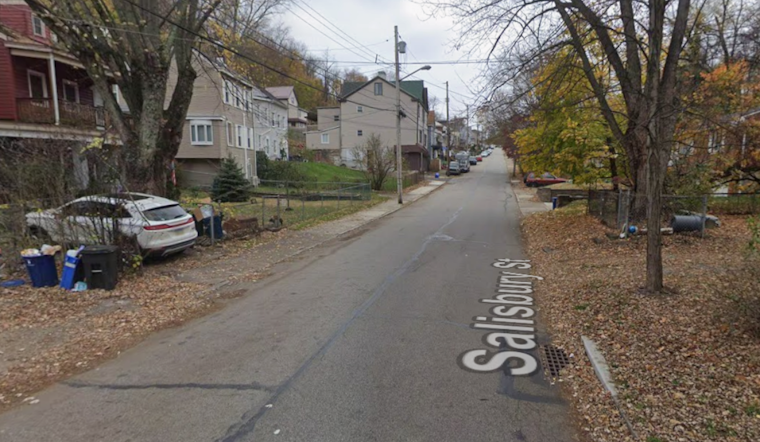
On a narrow stretch of Salisbury Street in Pittsburgh’s South Side Slopes, neighbors say one unassuming house has become the flashpoint of the block. Residents report that the property is sheltering nearly a dozen registered sex offenders, and their alarm has reached the point where the local councilmember is now actively involved.
People who live nearby describe the building as carved up into multiple units, blinds almost always drawn, with a board padlocked over one doorway. The setup, they say, makes daily life feel uneasy at best and unsafe at worst. The house sits close to a playground and a daycare, neighbors note, and parents say they are on high alert about children’s exposure. Community leaders and police are now engaged as residents push hard for a relocation plan.
Officials call it a "three-quarter-way" house
City officials told Channel 11 the house is operating as a three-quarter-way residence meant to help people released from supervision transition back into the community. Neighbors told the station they count at least 10 registered sex offenders living there. The building appears divided into apartments, a layout residents say was never explained or disclosed ahead of time, according to reporting from WPXI.
Public records tie the house to an LLC
County documents and real estate listings identify the recorded owner as Happy Life, No Wife LLC, and show the company purchased the Salisbury Street property in May 2024. Those public records list an LLC address and transaction details that match the parcel neighbors have been pointing to, indicating the building is being held as an investment or rental property. Public listing and tax data for the parcel line up with the ownership shown in county files, as reflected on Homes.com.
Councilor presses for relocations; owner says he was unaware
Councilmember Bob Charland told Channel 11 he does not want the facility operating in the South Side Slopes and said he is working "with several police agencies to get the residents moved to another location," according to the station. When reporters reached the person listed as the owner, that person said he did not know the property was being used to house sex offenders. Those statements were included in WPXI's on-the-ground coverage.
What the city can and cannot do
Federal fair-housing law and court decisions generally treat many group and transitional homes as standard residential uses. That limits how far a city can go in pushing them out of single-family neighborhoods through zoning rules or case-by-case spacing limits. Local governments can still enforce building, occupancy, and health-and-safety codes, and can require permits when an operation veers into commercial or otherwise unpermitted territory, but those steps have to be applied carefully to avoid unlawful discrimination.
The U.S. Department of Justice has taken cities to court when local restrictions were found to improperly block group homes, while planning professionals emphasize the need for reasonable-accommodation policies that try to balance safety concerns with civil rights obligations. For more on how those tensions play out in policy, see the American Planning Association and case summaries from the U.S. Department of Justice.
Neighbors say they will keep watching
Residents say they have no plans to let the matter quietly fade away. Neighbors report heightened worry during school pickup times and when the nearby playground is busy, and several say they are documenting what they see and staying in close contact with Charland’s office and public-safety agencies.
For now, the Salisbury Street house has become a case study in how local governments try to walk a tightrope: responding to neighborhood fears, enforcing building and occupancy rules, and still operating within the boundaries of federal fair-housing protections. Neighbors say they will keep the pressure on until the tenants are moved and any permit or code issues are sorted out.



