

























































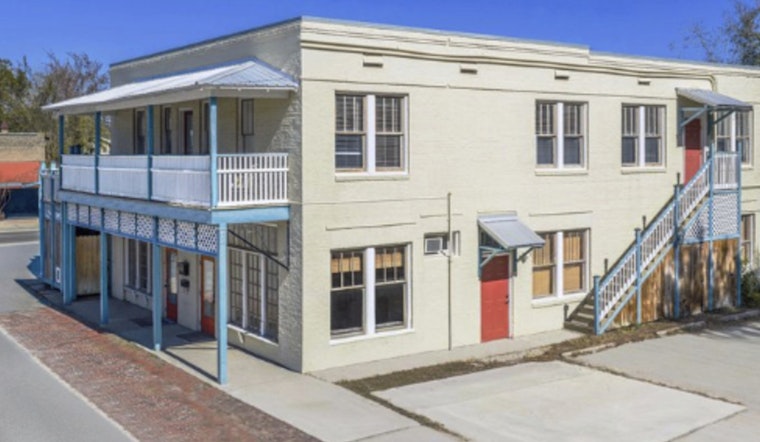
A St. Augustine wealth-advisory firm is putting serious money behind downtown, pouring millions into buying and rehabbing a building at 3 Davis Street. The project will give the company a permanent headquarters and is being cast as a fresh vote of confidence in the city's historic corridor.
The deal and the building
St. Johns Asset Management has committed millions to acquire and renovate what the Jacksonville Business Journal described as a 125-year-old property at 3 Davis Street. The firm's chief executive plans to move out of a leased office and into the revamped space as a permanent headquarters. Company materials describe the project as a major renovation aimed at adapting the building for modern office use while keeping its historic character intact.
About 3 Davis Street
Commercial listings place 3 Davis Street in the West King Street corridor just outside the core historic district, and show the building has recently housed a yoga center and a student hostel. Those listings record the structure's construction year as 1915, which does not quite line up with the "125-year-old" description in some reports. Market details for the property, including the year built and recent uses, appear on commercial listing pages for the address.
Why this matters for downtown
Rehabilitating older commercial buildings tends to generate local construction jobs and can attract new retail and service tenants, putting more feet on the sidewalk and more money in nearby cash registers. Studies prepared for preservation agencies have found that rehabilitation often creates more local jobs per dollar and can spark broader downtown reinvestment. That research is summarized by PlaceEconomics, which frames adaptive reuse as both an economic development tool and a way to reinforce local identity.
What's next
The Jacksonville Business Journal reports that St. Johns Asset Management has not released a formal construction schedule or full budget, and that permitting will dictate how quickly the work gets out of the talking stage and into demolition and build-out. The Journal notes that even the prospect of a large-scale rehab can stir up fresh interest from neighboring merchants and property owners while plans wind their way through permitting and design review.
For a relatively small wealth firm, taking on a downtown rehab of this scale is notable, and preservation advocates say private projects like this can serve as a model for measured growth that keeps St. Augustine's character front and center. Research from PlaceEconomics underscores the catalytic potential of well-executed adaptive reuse projects.





