

























































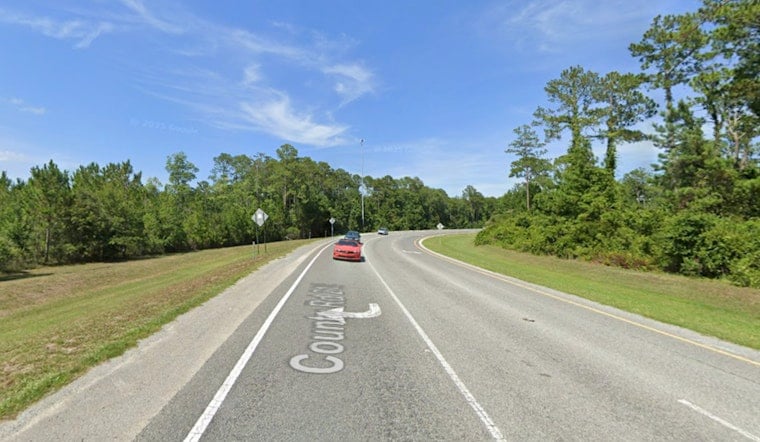
In southern St. Johns County, a roughly 18-to-20-mile run of I-95 between County Road 210 and State Road 207 has picked up a reputation that goes way beyond “bad traffic.” Locals swap stories about a “cursed” stretch of highway, tying its long backups and brutal crashes to an old legend that the interstate was built over ancient Native American burial grounds. Transportation officials are not buying the ghost-story angle, pointing instead to a mix of tricky road geometry and risky driver behavior. But the fact that parts of I-95 went in before modern preservation rules has reopened a touchy question: what exactly is under the asphalt.
Crash numbers and official take
According to Florida Highway Patrol data cited by News4JAX, there were 998 crashes along this corridor between January 2023 and April 2026. Those wrecks left 14 people dead and 34 with critical injuries. Troopers told the station that many of the incidents involved vehicles drifting out of their lanes, often tied to fatigue or distraction. Extra patrols and stepped-up enforcement have started to nudge the crash numbers down this year, but only modestly so far.
Why the road's history matters
The rules for protecting historic and archaeological sites changed dramatically in the late 1960s and early 1970s. The National Historic Preservation Act of 1966 created the Section 106 review process to shield archaeological and historic resources from federal projects, while the National Environmental Policy Act, signed into law on January 1, 1970, expanded environmental reviews to include cultural resources. The National Park Service details how Section 106 works, and the Council on Environmental Quality documents NEPA’s legislative history and scope.
Engineering and data point to drivers and geometry
An internal corridor analysis by the Florida Department of Transportation flags the section of I-95 south of County Road 210 as a high-crash area and highlights a pattern of reverse curves and loss-of-control wrecks that merits closer study. In other words, the data suggest the combination of road design and how people are driving is enough to explain the danger, without needing a supernatural assist. FDOT recommends targeted engineering reviews and countermeasures anywhere geometry and traffic volumes seem to amplify the risk.
Local memory and the 'burial ground' question
After earlier coverage of the crash-prone corridor, more than 40 viewers contacted the newsroom to say they believe the interstate was laid over burial mounds. A St. Johns County commissioner told News4JAX, “This was all Seminole controlled land.” The commissioner also described what they saw as puzzling crash patterns along that stretch, which has helped fuel calls from some residents and local historians for a formal archaeological look at what existed before the interstate was built.
If archaeology runs into human remains, law steps in
One thing is not mysterious at all: what happens if construction or investigation uncovers human remains or artifacts. Federal and state rules require work to stop, the site to be secured, and the proper authorities to be notified, followed by consultation with tribes and the State Historic Preservation Office. Under the FHWA and FDOT programmatic agreement and FDOT guidance, anyone who discovers possible remains must contact the district medical examiner and the State Archaeologist. Florida law, in Chapter 872 of state statutes, spells out how unmarked human burials must be treated. FDOT also lays out its cultural resource procedures in a Cultural Resource Management handbook that covers Section 106 compliance and what happens after a discovery.
What's next
For now, troopers and transportation engineers are focused on concrete steps to cut crashes: more enforcement, targeted engineering fixes, and public outreach about safer driving. At the same time, some residents continue to push for archaeological review and a fuller historical picture of the land beneath I-95. Any formal digs or surveys would need funding, jurisdictional sign-off, and coordination with state and federal preservation partners. That means the story of this stretch of interstate is likely to keep evolving, shaped both by what the traffic data show and by what local memory refuses to let go.





