

























































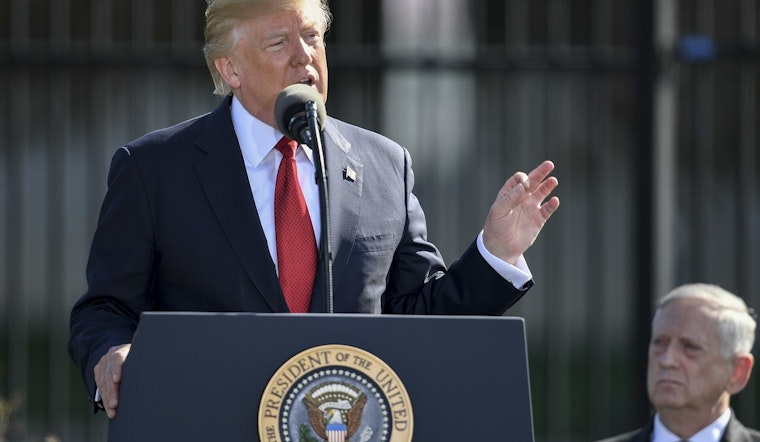
President Donald Trump on Thursday ordered federal agencies to start hunting down and releasing government files related to unidentified aerial phenomena (UAP), UFOs and alleged extraterrestrial life. The directive, announced in a post on the president’s Truth Social account, did not include a firm timeline and immediately triggered a complex vetting process inside military, intelligence and archival offices. Officials say the coming work will involve a careful balance between public transparency and national-security protections as reviewers wade through decades of potentially sensitive records.
What the president said
Trump said he was acting “based on the tremendous interest shown” and would instruct federal officials to locate and release material on UAPs, UFOs and “alien and extraterrestrial life,” according to Tampa Free Press. His post stopped short of promising specific release dates or listing which categories of documents will actually see daylight, leaving plenty of room for interpretation inside the bureaucracy.
Who will sift the files
Wire reports say Trump signaled he would put Pentagon leadership and a web of federal agencies on the job. He told reporters he would direct Defense Secretary Pete Hegseth and “other relevant agencies” to begin flagging records suitable for release, Reuters reported. That means the workload will likely spread across the Defense Department, the intelligence community and civilian science agencies that have touched UAP research over the years.
How agencies will handle declassification
The Pentagon’s All-domain Anomaly Resolution Office, or AARO, has already been laying out procedures for handling UAP records and has publicly said it supports “facilitating the declassification and public release of as much UAP-related information as possible.” AARO maintains an online reading room and information papers that explain how material is sorted, reviewed and prepared for potential release.
On the archival side, the National Archives has created a dedicated Unidentified Anomalous Phenomena records collection, known as Record Group 615. Agencies are expected to transfer and digitize relevant records into that collection on a rolling basis as material clears review, according to the National Archives.
Why now
The timing follows a sharp spike in public curiosity about UFOs and UAPs, fueled by a recent podcast exchange in which former President Barack Obama, asked about aliens, replied that “they’re real.” That comment, layered on years of congressional hearings and official reports on unexplained incidents, helped push the topic back into mainstream politics. Trump then publicly accused Obama of revealing “classified information” when the subject came up, a charge that, according to Reuters, has now become part of the backdrop for this new disclosure push.
What to expect next
Officials and archivists are already warning that the process will not be fast. The National Archives says UAP-related material will be accessioned into the new records collection and posted online “on an ongoing, rolling basis” as agencies finish their reviews, according to NARA. Both NARA and AARO stress that existing rules for redaction and national-security review will still apply, which means some files could be heavily blacked out or held back entirely.
There is no clear timetable for any large-scale release, and early activity is expected to produce scattered uploads rather than one big document dump. The directive essentially formalizes what disclosure advocates have been demanding for years and hands archivists, Pentagon analysts and intelligence officials a near-term logistical headache with long-term political stakes. As the first batches of files trickle into public databases, the fight over how much the government is still keeping quiet is likely to heat up all over again.





.jpg)