

























































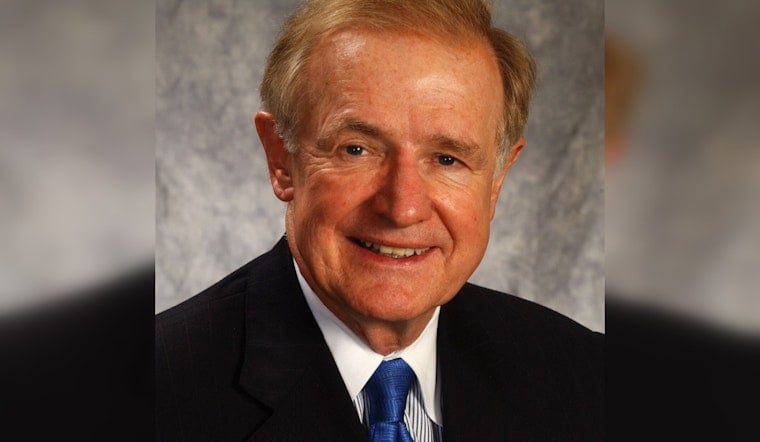
Donald W. Riegle Jr., the Flint-born lawmaker who carried Michigan’s voice to Washington under seven presidents, died Friday at his home in San Diego at age 88, his family said. A Republican-turned-Democrat who logged nearly three decades in the U.S. House and Senate, Riegle carved out a reputation for pushing banking reforms and pressing for better health care for veterans after the Gulf War.
His family said he died of cardiac arrest at his San Diego home, according to the Associated Press. Calling him “the cornerstone of our family,” they said memorial services are pending. The AP noted that his wife of 48 years, Lori Hansen Riegle, was at his side when he died.
Career in Congress
Riegle first headed to Capitol Hill in 1966, winning election to the U.S. House as a 28-year-old Republican from Michigan. He switched parties in 1973 and, three years later, won a seat in the U.S. Senate. According to the U.S. House History and Archives, he was appointed to the Senate in December 1976 to fill a vacancy and then served as senator through January 3, 1995. After leaving the Senate, he returned to private life but stayed active as a voice on banking policy and veterans’ issues.
Banking, Gulf War Work and Controversy
As chairman of the Senate Banking Committee, Riegle pushed for financial reforms in the wake of the savings-and-loan crisis and helped guide major banking legislation in the early 1990s. In 1994, he led a Senate inquiry into U.S. dual-use exports and their possible links to Gulf War illnesses, work that produced a report widely known as the “Riegle Report,” documented in the Department of Defense’s GulfLINK archive. Riegle was also among the so-called “Keating Five” senators who faced an ethics inquiry in 1990. The Senate Ethics Committee later concluded that he had not broken federal law but that his conduct had “appeared improper,” as reported by the Associated Press.
Family, Post-Senate Life and Legacy
In retirement, Riegle went into government relations work and split his time between Michigan and California. Reporting shows he joined APCO Worldwide as chairman of government relations in 2001. His family and former colleagues remember him as someone who fought for economic opportunity, expanded health coverage and veterans’ causes. Memorial arrangements are pending and the family has asked for privacy, according to ClickOnDetroit.



