

























































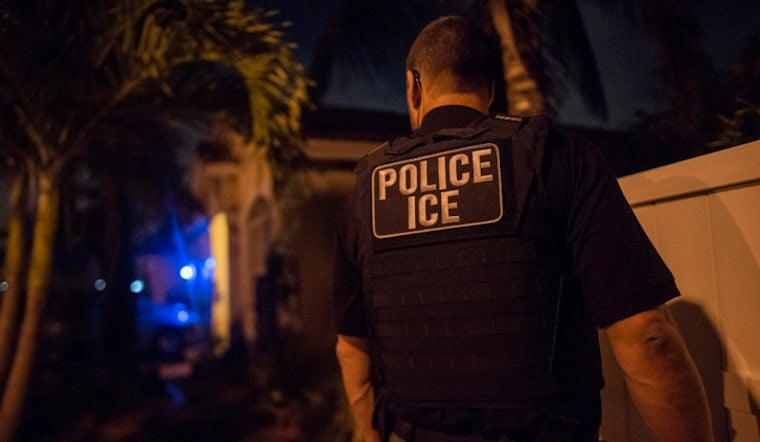
On paper, the January immigration sweep known as Operation Country Roads was billed as a crackdown on dangerous criminals. According to a new ACLU-backed analysis released Monday, the numbers tell a very different story.
The report, based on federal immigration records, finds the operation largely swept up people with no serious criminal histories, undercutting how state and federal officials originally described the surge. It also says the government’s public tally overstated how many people were actually booked into West Virginia jails and that many arrests tied to the operation were processed outside the state. The findings are increasing scrutiny of West Virginia’s partnership with ICE and its use of the 287(g) program during the sweep.
What the records show
The analysis of ICE and Department of Homeland Security files identifies 593 unique arrests recorded in West Virginia during the 15-day operation. Only 408 people were actually booked into West Virginia detention facilities, according to the report. The remaining 185 arrests were processed without a local detention, and 63 arrests occurred in Pennsylvania but were coded to West Virginia.
Three-quarters of those booked into state jails had no criminal record at all, the review concludes. Of the 42 people with prior convictions, only five had felony records, and none involved sex crimes against children. According to a report by Dragline and the ACLU of West Virginia, the most common prior convictions were DUIs and routine traffic offenses.
Officials touted "dangerous" arrests
Public statements from authorities painted a far harsher picture when the operation wrapped up. The U.S. Attorney’s Office said the campaign "resulted in 650 arrests throughout West Virginia" and asserted that several of those arrested had "serious criminal histories, including convictions for child sex abuse" and other offenses. The Justice Department release also noted that some arrests led to federal criminal charges tied to search warrants executed during the sweep.
Those official claims still stand, but the new record-by-record analysis suggests they describe a small slice of the overall arrest pool, not the bulk of people taken into custody.
Jails filled, counties got paid
The review also lays out how the operation collided with an already strained jail system. On the morning of Jan. 14, state corrections records showed 336 ICE detainees statewide. South Central Regional Jail alone held 116 people and was operating at about 129 percent of its rated capacity that day.
Under the state’s contract, jails receive roughly $90 per ICE detainee per day. Based on those per-diem rates, the report estimates the detentions generated about $1.59 million for county facilities during the period studied. Those facility, capacity and payment figures come from the Dragline and ACLU analysis of ICE detention tables and state corrections data.
Judges push back
The surge of detentions quickly spilled into federal court. A wave of habeas corpus petitions followed, and several judges in the Southern District of West Virginia have ordered detainees released while questioning the legality and evidentiary basis of many arrests.
"Freedom is the constitutional default," U.S. District Judge Joseph R. Goodwin wrote in one ruling, language that has been widely cited as courts scrutinize the operation’s tactics and detention practices. Mountain State Spotlight has cataloged the judges’ orders and the releases that followed.
Local reaction and next steps
On the ground, the sweep has rattled communities, especially after workplace and restaurant arrests. Recent detentions at Don Patron locations sparked a candlelight vigil and local demands for more transparency around who was being picked up and why.
Reporters and advocates say the Dragline and ACLU analysis is likely to become a fixture in ongoing court filings and oversight efforts as lawyers seek more detailed records and explanations from federal and state agencies. Local reporting by WDTV has highlighted community responses, including the vigil.
The new analysis does not change the fact that some criminal charges have been filed in connection with Operation Country Roads. It does, however, undercut the broader public narrative that the sweep primarily targeted violent or sexual offenders. State and federal officials continue to defend the campaign as lawful enforcement, while civil-liberty groups say the records demand better public accounting and clearer rules for how arrest totals and criminal histories are presented to the public.





.jpg)