

























































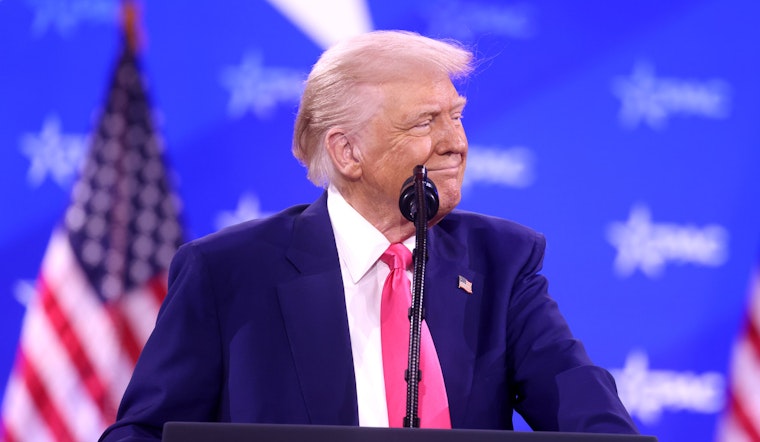
The long-running copyright fight between President Donald Trump, his 2024 campaign and the estate of soul legend Isaac Hayes is over, wrapped up with a quiet deal in federal court in Atlanta. The parties filed a joint notice dismissing the case after mediation, and while the paperwork ends the dispute, it does not reveal what either side walked away with.
The suit, filed in August 2024, accused Trump and his campaign of repeatedly using Hayes’ co-written song "Hold On, I’m Coming" at rallies without a license, tallying roughly 133 alleged plays across the 2020 and 2024 election cycles. A federal judge issued a preliminary injunction in September 2024 that blocked any further use of the track while the case moved forward, according to AP News.
Court filings show that on Monday the parties jointly asked the court to dismiss the case and agreed that each side would cover its own legal costs. Lawyers told The Atlanta Journal-Constitution that the resolution followed a round of mediation and an extension of time to exchange evidence. The estate’s attorney, James Walker Jr., said the family was “happy to see this matter resolved,” but declined to share any financial or other terms.
How the case played out in court
Judge Thomas Thrash Jr. kept the case alive past the early stages in April 2025, granting in part and denying in part several motions to dismiss after concluding that the estate had plausibly alleged both ownership of the song and infringement. At the same time, the court tossed some claims and transferred others. The judge’s written opinion dives into disputes over chain of title and termination notices that formed the backbone of the estate’s ownership theory, according to court records posted on Justia Dockets & Filings.
Hayes family reaction
Isaac Hayes III announced the settlement on social media, saying the family was “satisfied with the outcome” and casting the deal as a win for protecting artistic legacy and copyright. The estate’s statement added that it remains focused on carefully managing Hayes’ body of work and pushing conversation about how creative works end up in political arenas, as reported by People.
Why it matters
The settlement shuts down one of several high-profile clashes over the use of popular music in political campaigns, an issue that has drawn repeated fire from artists and estates who say their songs were played at rallies without permission. It also takes a once-ubiquitous rally anthem out of the legal spotlight. Legal observers had flagged this case for the way it leaned on technical questions about termination of grants and public performance licensing that other estates might try to use in future fights, according to AP News.
Legal implications
The dispute centered not only on whether the song was played but also on who actually controlled the rights and whether the estate had properly used federal termination provisions to reclaim them. The judge said those points were plausibly pleaded and supported by Copyright Office records that the court formally acknowledged. Because the parties settled in private, those issues will probably remain unanswered as precedent, although the docket and filings still offer a kind of how-to manual for similar lawsuits, according to the opinion posted on Justia Dockets & Filings.




.jpg)