

























































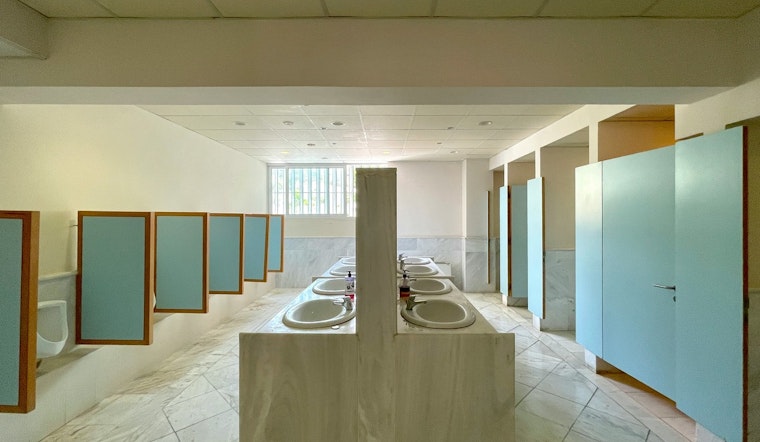
Tablet-based hall passes that record when students leave class and how long they stay in the bathroom are now part of daily life in some New York City public schools, and kids say what used to be a quick trip down the hall is starting to feel like a data point. The rollout has turned into a standoff between school officials who insist the technology is a safety tool and students and civil-liberties advocates who see it as surveillance creeping into one of the few places students expect a little privacy.
SmartPass, the company behind the software, touts features that let any teacher or staffer see “all students with an active pass — including where they should be going and how long they have to get back,” and markets tools meant to “disrupt bathroom meetups” and cut down on vaping or vandalism. According to the SmartPass website, the system timestamps passes, displays a “Hall Monitor” view of active passes, and generates analytics on student movement that are billed as a way to reduce missed instructional time. Some administrators say the platform simply replaces crumpled paper slips and saves teachers a few minutes they used to spend scribbling passes by hand.
City contract and vendor disclosures show that the Department of Education has approved SmartPass for use and requires vendors to follow New York's student-data rules, including obligations around encryption and limits on how long personally identifiable information can be kept. The DOE's vendor listing for SmartPass spells out contract terms and notes that vendors must securely delete or return student data when it is no longer needed and may not share PII with subcontractors without written safeguards. Those conditions are designed to comply with New York Education Law 2-d and the DOE's own privacy and security standards.
Students and advocates say the practice feels less like efficiency and more like control. "It's taken micromanaging students to a whole other level," 18-year-old Shokhjakhon Samiev told Gothamist, which reported that DOE spokesperson Onika Richards said, "NYC Public Schools takes student privacy concerns seriously," and that 167 schools are using SmartPass. The same report describes student workarounds, such as signing out under a friend's name, and notes that some teachers have quietly stuck with old-school paper passes.
Money and scale
City spending records list roughly $368,000 in SmartPass contracts in 2025 and about $120,000 in 2024, numbers that have prompted critics to ask whether iPads at bathroom doors are the wisest use of scarce school dollars. Those totals appear in public spending data for the vendor on CheckbookNYC, and some parents argue that the same money could go toward more staff or basic building repairs instead of high-tech hall monitoring.
Parents and advocates push for a moratorium
The discomfort around digital hall passes has folded into a broader campaign to put the brakes on AI and data-heavy tools in classrooms. A petition on Action Network, organized by NYers for an AI Moratorium and sponsored by groups including Class Size Matters and the Parent Coalition for Student Privacy, had more than 1,300 signatures, calling on Mayor-elect Zohran Mamdani and Chancellor Kamar Samuels to adopt a two-year pause while detailed rules are drafted. The petition warns that tools that collect and analyze student behavior can be exploitable and long-lasting and cites SmartPass-style systems as one example; the petition is posted on Action Network.
How it plays out in school
In schools using SmartPass, students may be required to sign out at a kiosk or an iPad mounted by the classroom door, triggering a timestamped log that is stored in the student's pass history. The vendor's promotional materials highlight a "Student Snapshot" view and a "Hall Monitor" screen for staff, and SmartPass case studies focus on fewer hallway disruptions and quicker record-keeping. Students told reporters they still sometimes use paper passes and that the system can be gamed, which undercuts the notion that software alone can keep order in the halls.
Privacy and the law
New York's Education Law 2-d requires vendors that handle student data to encrypt identifying information and to provide ways for families and schools to access and correct records, and the DOE's disclosure for SmartPass says the company has agreed to those protections and to delete or return PII when a school stops using the product. Those contractual promises exist on paper, but civil-liberties advocates say they do not fully address the ethical questions raised by behavioral analytics and long-term profiling of students' movements. The DOE maintains that approved digital tools must meet established privacy and security standards, while students and parents are asking for clearer public limits on how long data is kept, how analytics are used, and who gets to see the information.
For now, the fight over digital hall passes is likely to stick around as parents and students press the DOE for tougher rules and some principals and teachers defend SmartPass as a practical way to manage crowded hallways. The controversy is unfolding just as the department was expected to release guidance on artificial intelligence in schools this week, a move that could determine whether tools like SmartPass spread or run into tighter restrictions, according to Gothamist.





