

























































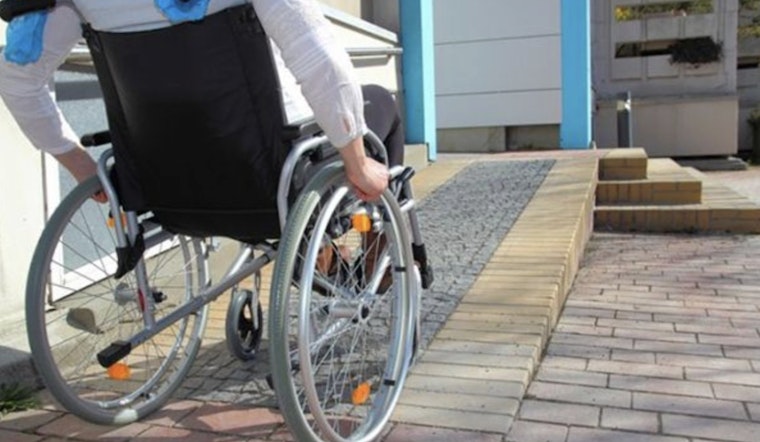
A new federal lawsuit says three recently built rental complexes in Brooklyn and Queens were designed and constructed in ways that shut out people with mobility disabilities. The complaint, filed by the Fair Housing Justice Center, argues that everyday features, from narrow doors to steps in common areas, effectively keep wheelchair users from fully using their apartments and building amenities. The plaintiffs are asking a federal court to order repairs and other remedies to restore meaningful access.
According to New York Daily News, the suit targets Bridgeview Dumbo, a 225-unit building in DUMBO; Astor on Third II, a 137-unit rental in Astoria; and The Northern, a two-building, 198-unit complex in Long Island City. The complaint cites narrow kitchens, bathrooms and doorways, mailbox keys and laundry controls mounted too high for wheelchair users, and steps between private balconies and some shared areas that block access. The filing in federal court in Brooklyn names multiple developer LLCs and contractors as defendants.
Testers Describe Everyday Obstacles
The case grew out of undercover testing that the Fair Housing Justice Center and other advocates routinely use to spot inaccessible housing. Fair Housing Justice Center enforcement reports have repeatedly flagged the same issues: narrow doorways, raised thresholds, high mailboxes and inaccessible laundry rooms and amenity entrances. Advocates say those choices can make bathrooms, kitchens and shared spaces effectively off limits for wheelchair users and usually require layout changes and retrofits, not just routine maintenance, to fix.
Defendants and Past Settlements
The new complaint names several LLCs and holding companies tied to the Rabsky Group, NY Building Associates, engineer Naresh Mahangu, Durukan Design and Fischer Rasmussen Whitefield Architects, according to New York Daily News. Plaintiffs point to an earlier Astor on Third settlement, a $500,000 agreement that required accessibility fixes, as evidence that similar problems carried over into the newer Astor on Third II project. The suit also notes that The Northern received a city density bonus that required 37 affordable units, something plaintiffs say raises questions about public oversight and how taxpayer-supported incentives are monitored.
What the Complaint Seeks
The Fair Housing Justice Center is asking the court for injunctive relief that would force retrofits, as well as monetary damages and fair-housing training for building staff, among other remedies. In a recent enforcement post, the organization wrote, “No one should feel the indignity of a closed door,” and its lawyers argue that developers have to design and build with access in mind from day one. If the court agrees, landlords could be ordered to reconfigure layouts, lower mailboxes and appliances, and alter thresholds and access routes so the buildings comply with federal and local law.
Wider Pattern in New Construction
The lawsuit lands amid growing evidence that many of New York City’s newest market-rate buildings are racking up higher-than-average violation counts, undercutting the idea that new construction automatically means better quality. An analysis cited by The Real Deal found that nearly 10 percent of residential buildings completed since 2016 had at least one violation per unit, a rate above the citywide average. Housing advocates say accessibility suits like this one highlight broader worries about speed-to-market construction and thin post-construction oversight.
How Tenants Can Respond
Tenants who run into accessibility barriers can file complaints with federal authorities. HUD explains how to submit a Fair Housing Act claim and provides contact details on its online complaint page. According to HUD, people can file online or call the Office of Fair Housing and Equal Opportunity at 1-800-669-9777. Local legal-aid groups and tenant organizations can also help residents document barriers, file administrative complaints and pursue remedies if landlords do not address the problems.



