

























































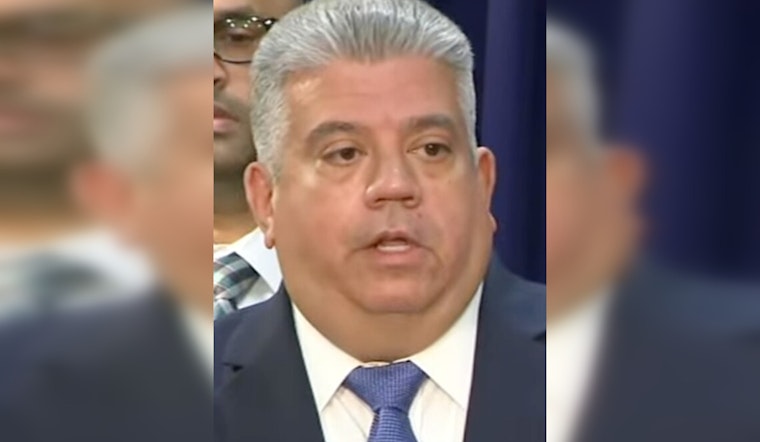
Brooklyn District Attorney Eric Gonzalez is taking his anti‑violence experiment on the road, moving Project Restore from its debut run in Bedford‑Stuyvesant into Brownsville in the coming months. The yearlong pilot pairs paid work, trauma‑informed counseling and mentorship with local partners, all aimed at steering young men away from gang life and toward jobs, school and stable housing. City officials say the expansion comes on the heels of significant drops in homicides across parts of Brooklyn last year and is intended to lock in those gains block by block.
Gonzalez announced the move at an event in Downtown Brooklyn, casting Project Restore as a long‑term, neighborhood‑driven strategy rather than a quick crackdown. As reported by the Brooklyn Eagle, he said the Bed‑Stuy pilot “made a difference” and that Brownsville is next because officials want to "keep that progress." The Eagle also highlighted testimony from program alumni and community partners who described Project Restore as a critical off‑ramp for young men at risk of getting pulled deeper into street violence.
How Project Restore Works
Project Restore runs as a cohort model that mixes income with intensive support. Participants earn a paid internship while receiving counseling, peer mentoring and workforce training designed to rebuild ties to school and employment. According to CBS New York, the program combines real‑world job experience and hands‑on case management with trauma‑informed therapy so participants can confront the root causes of violence while picking up marketable skills.
Early Results and Evaluation
A formal review by Columbia University’s Center for Justice found measurable early impacts from the Bed‑Stuy rollout. The report notes, “All 30 participants successfully completed the program with zero incidents of arrests for gun violence involvement,” and estimates roughly a 28% reduction in shooting victims and a 22% decline in felony assaults in the targeted precincts. The Center for Justice also calculated a benefit‑cost ratio of about 6.7 to 1, driven largely by avoided incarceration and higher participant earnings.
Funding And Partners
The initiative is a joint effort of the Kings County District Attorney’s Office, Columbia researchers, city agencies and neighborhood‑based nonprofits. The Mayor’s Office of Criminal Justice lists Project Restore as one of its signature violence‑prevention pilots, and the New York City Council allocated $2 million for the Brooklyn DA’s Project Restore in the FY26 adopted budget to grow staffing, trauma services and community partnerships. Officials say that level of public investment is what makes it possible to replicate the Bed‑Stuy model in Brownsville and, eventually, in other communities.
Voices From The Ground
Graduates and local groups describe Project Restore as nothing short of transformational. DeShawn Willis, now working as a participant engagement coordinator, told the Brooklyn Eagle that the program “completely altered the trajectory” of his life and pushed him to give back by working with other young men. The B.R.O. Experience, one of the community partners that hosted workshops and a graduation ceremony for the Bed‑Stuy cohort, said it led cognitive behavioral group therapy and provided additional supports that helped participants reengage with school and work.
Officials say the Brownsville expansion will mirror that formula, combining paid opportunities, clinical support and outreach to rival crews in an effort to stop retaliation and stabilize streets. The mayor’s office and city agencies have signaled that they back the Brownsville rollout as part of a broader push to spread proven prevention tools across Brooklyn’s hardest‑hit neighborhoods.





.jpg)