

























































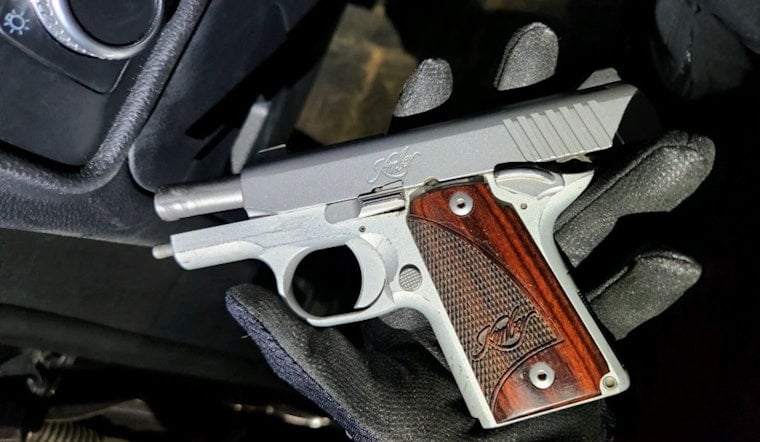
What started as a routine traffic stop in Burien on Tuesday quickly turned into a two-arrest situation, with deputies reporting a fake name, an outstanding warrant, and a stolen handgun tucked into a passenger’s pocket.
According to the Burien Police Department, a deputy pulled over a vehicle and says the driver tried to pass off another person’s name as his own. Deputies later determined the driver had an active warrant and booked him into jail on driving while license suspended in the third degree, identity theft for allegedly providing false identifying information, and operating a vehicle without a required ignition interlock device. A passenger in the vehicle, who deputies say refused to identify himself, was arrested for obstruction. Burien Police Department Facebook post
Loaded Handgun Recovered And Confirmed Stolen
After the arrests, deputies conducted a search incident to arrest and say they found a loaded handgun in the passenger’s pocket. The department wrote that the firearm was later confirmed stolen and noted that the passenger is a convicted felon who is legally barred from possessing guns. Both individuals were booked into the King County jail, and “charges will be forwarded to the prosecutor's office,” the department said. Burien Police Department Facebook post
State Statutes That Apply
Washington’s identity theft statute (RCW 9.35.020) covers using another person’s identifying information and can carry felony-level penalties depending on the conduct involved.
Driving while license suspended in the third degree is defined at RCW 46.20.342, while unlawful possession of a firearm by someone with a prior felony conviction is set out in RCW 9.41.040. Courts can also require ignition interlock devices or penalize operating a vehicle without a court-ordered device under RCW 46.20.720, and the Washington Department of Licensing provides guidance on ignition interlock requirements and possible exemptions. Washington DOL
What Happens Next
The Burien Police Department says the case has been forwarded to the prosecutor’s office for charging decisions. Prosecutors will determine whether to file formal charges and on what counts. Any future court records or filings are expected to identify the suspects and spell out the precise charges if the case moves forward.





