

























































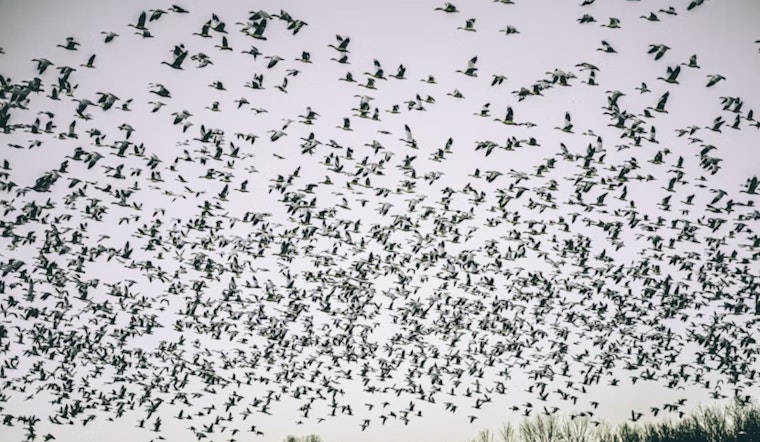
More than 20,000 greater sandhill cranes have poured into Colorado’s San Luis Valley this week, turning quiet wetlands and cut barley fields into a chattering, wing-flapping traffic jam in the sky as the Monte Vista Crane Festival draws near. This surge is part of the Rocky Mountain population’s regular northbound migration, a crucial layover where the birds rest and refuel before pushing on to breeding grounds farther north. Standing around four feet tall, weighing about 11 pounds and stretching wingspans of up to seven feet, the cranes are hard to miss, and their rattling calls and high-stepping courtship dances turn the valley into a full-on wildlife show.
According to the Denver Gazette, this latest wave represents just part of the Rocky Mountain crane population that funnels through the San Luis Valley every spring. The Monte Vista Crane Festival notes that this year’s celebration runs March 6 through March 8, and estimates that roughly 23,000 to 27,000 cranes typically pass through each season. Colorado Parks and Wildlife points to the species’ dramatic mating displays, along with their large size and sweeping wingspans, as big reasons the migration draws equally big crowds.
Where to See the Cranes
The Monte Vista National Wildlife Refuge’s Wildlife Drive and the pullouts along Highway 15 are the prime front-row seats for this seasonal show. During the height of migration, refuge staff and volunteers often set up spotting scopes so visitors can get a closer look without crowding the birds. The U.S. Fish & Wildlife Service states that the public pullouts and the Wildlife Drive are open from one hour before sunrise to one hour after sunset, giving plenty of time to catch the cranes pouring in and out of their roosts at dawn and dusk.
Why the Valley Matters
The San Luis Valley is not just a scenic backdrop. Its irrigated barley fields and carefully managed wetlands provide the high-energy food and safe roosting cover cranes need to fuel long-distance flights north, as outlined by Great Sand Dunes National Park & Preserve. According to Colorado Parks and Wildlife, cranes generally begin arriving in early February and are usually gone by late March, continuing to breeding grounds in Idaho, Montana and Wyoming.
Health and Viewing Safety
State and federal agencies are still keeping a close eye on wild birds for highly pathogenic avian influenza and other diseases. The Colorado Department of Agriculture confirmed detections of the virus this winter in backyard flocks and at a commercial egg-layer operation in Weld County. The Centers for Disease Control and Prevention reports that human infections remain uncommon but advises people not to touch sick or dead birds and to follow public-health guidance if they work around animals that could be infected.
Going to the Festival
The Monte Vista Crane Festival packs the weekend with guided bus tours, speaker presentations and an on-site craft fair. Organizers also post maps and a viewing guide on their website to help visitors plan crane-watching outings. Attendees are encouraged to bring binoculars, stick to road shoulders and designated pullouts, and follow refuge rules and private property boundaries so the birds and their habitat stay calm, wild and worth coming back to see next year.





