

























































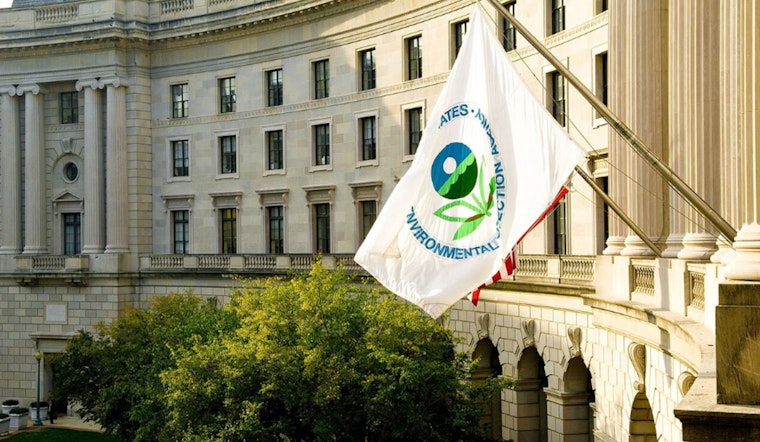
Federal regulators just told Arizona that, when it comes to other states' smog problems, the Grand Canyon State is basically off the hook. The Environmental Protection Agency's latest finding could spare Phoenix-area industry and state regulators from a fresh wave of ozone crackdowns, even as local monitors keep logging unhealthy days and health advocates warn lungs across the Valley are still taking a hit. The big question now shifts back to state and county offices: if EPA is stepping back, who is going to clean up the air?
EPA proposal and what it means
On Jan. 27, 2026, the Environmental Protection Agency proposed approving State Implementation Plan submissions from eight states, including Arizona, concluding those plans adequately address interstate ozone transport. As announced by EPA, the move would withdraw earlier disapprovals tied to the 2023 "Good Neighbor" rule and resolve the covered states' transport obligations if the proposal is finalized. EPA frames the action as the first phase of a broader reconsideration of the federal approach to cross-state ozone.
Local coverage and reaction
Local reporters quickly spotted the disconnect between the federal paperwork and the air people actually breathe. Coverage from Arizona's Family highlighted that Phoenix-area ozone has worsened even as EPA says Arizona is not a major contributor to downwind nonattainment. Residents and public-health advocates told reporters they are still worried about "bad breathing" days and asthma triggers, regardless of what the interstate modeling shows.
Modeling, thresholds and the technical finding
EPA's proposal leans on source-apportionment modeling and a one part-per-billion (ppb) linkage threshold used in Step 2 of the agency's traditional four-step interstate transport framework. According to the Federal Register notice, EPA's review found Arizona's modeled contributions to certain downwind receptors were roughly 0.49 ppb, below the 1 ppb cut-off the agency applied, so Arizona was not considered "linked" and was not subjected to additional federal measures. Supporters say that approach tracks with long-standing technical practice. Critics counter that picking a single threshold and modeling window can undercount episodic or background sources that communities still feel in their lungs.
Who's pushing back
Environmental groups argue the move could leave downwind communities stuck with pollution they did not cause, warning that narrow modeling choices can miss real health impacts. Reporting from Utility Dive notes that clean-air advocates see the rollback as a retreat from stronger federal controls and say litigation or new lawsuits are possible if EPA finalizes the rule. Public-health advocates emphasize that whatever the models say, they do not erase lived experience on high-ozone days.
Industry and state response
Business and utility groups, on the other hand, greeted the proposal as a welcome reprieve for power plants and other big emitters. Analysis from the American Public Power Association and industry commenters argued the shift restores more state-level control over air planning and avoids aggressive new limits that could affect reliability and costs. Arizona officials have described EPA's action as a validation of the state's modeling and as breathing room to focus on local strategies.
Legal and regulatory next steps
EPA says the proposal will be open for public comment for 30 days after it appears in the Federal Register, and that additional actions will follow as the agency completes its broader reconsideration. All of this plays out against a backdrop of active litigation. The Supreme Court has stayed enforcement of the earlier Good Neighbor Plan and several appellate rulings have reshaped EPA's path, so the final outcome will be decided through a mix of rulemaking and court decisions, according to agency documents.
Why Phoenix still struggles
Scientists and local planners say Phoenix's ozone problem is not a simple on-off switch. Semi-arid chemistry, wildfire smoke, cross-border transport and rising temperatures all complicate efforts to control smog by targeting a single source category. Peer-reviewed modeling summarized in Geoscientific Model Development shows the region's ozone design value rising from the mid-70s ppb in 2017 toward the low-80s ppb by 2022, and local coverage has repeatedly documented more unhealthy ozone days in recent years. Those twin realities, high local ozone levels and relatively small modeled cross-state contributions under EPA's test, are driving the current policy fight.
What to watch
Maricopa County and the Arizona Department of Environmental Quality say they will keep monitoring conditions, issuing high-pollution advisories when needed and refining local plans while the federal review plays out. Residents can track current air quality and advisories through the Maricopa County Air Quality Department's website as regulators, industry and advocacy groups prepare their comments and, potentially, their legal briefs.





.jpg)