

























































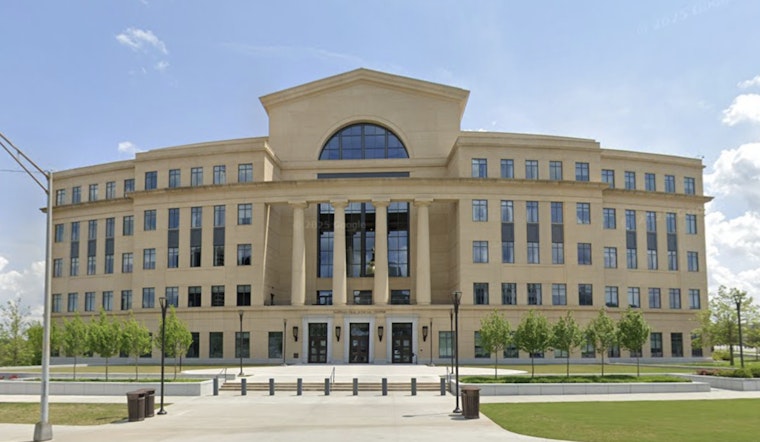
Georgia's long-running fight over how and when it can carry out death sentences landed back before the state Supreme Court on Wednesday, with lawyers arguing over whether a pandemic-era deal should still be able to halt executions for nine men on death row.
Solicitor General John Henry Thompson told the justices that an agreement struck during the height of COVID-19 should not stop the state from seeking new death warrants. He urged the court to overturn a Fulton County judge's 2025 ruling that has stalled those executions, saying the pandemic is now "in the state's rearview mirror." The hearing unfolded as at least one condemned prisoner pressed a separate federal appeal challenging how the state plans to kill him.
As reported by The Atlanta Journal-Constitution, Thompson argued that the nine prisoners already "received the reprieve their attorneys bargained for" and "cannot be allowed to escape justice permanently." He said the pandemic-related problems that once made executions impractical or unsafe have passed and noted that executions for inmates not covered by the 2021 agreement have resumed under what he described as "safe and fair conditions."
Federal Defender Program attorney Sarah Brewerton-Palmer, speaking for the prisoners, countered that the state has not yet met the terms it agreed to. She urged the justices to require proof that COVID-19 vaccines are available to infants under 6 months before Georgia can move forward against the nine men covered by the pact.
Background on the agreement
The current fight traces back to a 2021 settlement between the Attorney General's Office and capital defense lawyers. Under that deal, certain executions would not be scheduled until six months after three things happened: the statewide COVID judicial emergency ended, normal prison visitation resumed and a vaccine was "readily available to all members of the public." Judges and lawyers working under a state task force hammered out the framework as the pandemic scrambled court dockets and prison operations, according to reporting by the AP.
In December 2022, the Georgia Supreme Court weighed in on how that deal was formed, holding that an email exchange between state officials and defense lawyers created an enforceable contract in State v. Federal Defender Program. That opinion did not end the dispute, but it locked in the agreement's basic terms while lower courts wrestled with whether those conditions had actually been met.
Fulton County Superior Court Judge Shukura Ingram later found in 2025 that one key condition was still missing. Because COVID-19 vaccines were not yet approved for infants under 6 months, she ruled that the vaccine requirement remained unsatisfied and barred the state from seeking execution warrants for the nine prisoners. The injunction, described in coverage and court summaries from the Death Penalty Information Center, is the order the state is now asking the Supreme Court to undo.
Related appeal on execution method
On a separate track, one of the nine men, Michael Wade Nance, has been pursuing a different kind of challenge. Nance has asked federal courts to let Georgia execute him by firing squad, arguing that lethal injection would be unconstitutionally cruel in light of his medical condition and the medications he takes.
The 11th U.S. Circuit Court of Appeals has previously said portions of Nance's claim are plausible, allowing his lawsuit to move forward. That ongoing litigation, detailed by Law&Crime, could complicate how and when the state carries out his sentence even if Georgia's Supreme Court frees prosecutors to resume seeking death warrants under the 2021 agreement.
Legal stakes
If the Georgia Supreme Court sides with the state, prosecutors would regain the ability to seek execution dates for the nine prisoners whose cases have been on hold. If the justices uphold Judge Ingram's injunction, the pause will continue until the agreement's conditions are clearly met.
Court records and reporting note that, even if the vaccine requirement is eventually satisfied, the state would still need to give three months' notice before asking a judge to sign an execution order for prisoners covered by the deal. That built-in delay has become a key detail for observers tracking how quickly the state could move if it wins this round.
The justices are being asked to balance basic contract-law principles, including whether the state is bound by the terms it agreed to during a public health crisis, against Georgia's interest in carrying out lawfully imposed death sentences.
Numbers and timeline
The Georgia Department of Corrections reports that 33 inmates were under sentence of death as of December 31, 2025. Only nine of those are covered by the 2021 agreement at issue in this case. Other prisoners have continued to face execution, including Willie James Pye, who was put to death in March 2024, according to The Atlanta Journal-Constitution.
With the Georgia Supreme Court now weighing the state's appeal, there is no set timetable for when the nine contested cases could move again. For now, their fate sits with the justices, who must decide how much weight to give a deal struck in the shadow of a pandemic that state lawyers now insist is firmly in the past.





