

























































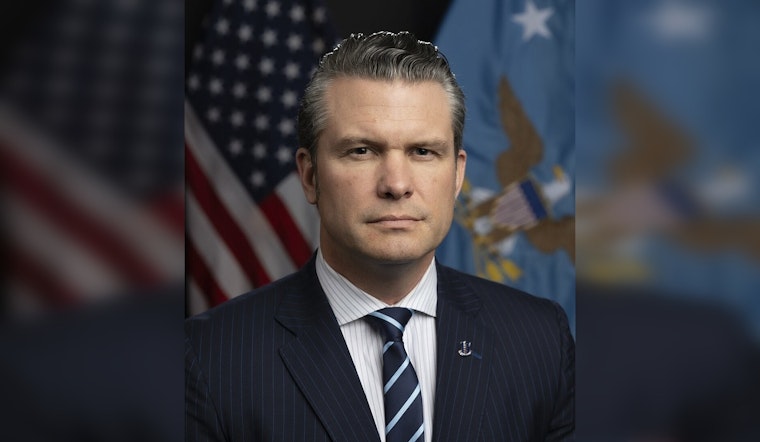
Defense Secretary Pete Hegseth is shaking up the military’s spiritual ranks, ordering U.S. military chaplains to stop wearing visible rank insignia on their uniforms. The move, he says, is meant to make chaplains less intimidating to junior service members and refocus their role squarely on religious ministry, while keeping their commissioned-officer status fully intact.
In a memo and a video message announcing the change, Hegseth said the shift is meant to "reduce unease or anxiety service members may have in approaching a superior." Instead of rank, chaplains will wear emblems that identify their faith tradition. He also told staff the Pentagon will cut down its detailed list of religious codes and plans to move to 31 official faith codes, while chaplains "will retain their rank as officers," according to Fox 5 San Diego.
What Changes and How
Hegseth is pitching the uniform tweak as part of a broader reset that pushes chaplains back toward explicitly religious ministry and away from what he has criticized as a "self‑help" style of spiritual programming. As reported by Stars and Stripes, he previously ordered the Army’s Spiritual Fitness Guide scrapped and said the department would streamline how it recognizes and catalogs faiths.
That effort targets a Defense Department system that ballooned in 2017, when a memorandum expanded faith-and-belief codes to more than 200 entries. The document, publicly posted and cited in demographic tracking, is available through the American Humanist Association’s copy of the DoD memo. Hegseth now says the underlying framework needs to be simplified, even as critics warn that what gets cut from that list could matter as much as what stays.
Why Critics Are Sounding Alarms
Civil-rights and secular organizations argue the new approach could end up favoring some faiths over others. They have pressed the Pentagon for records spelling out the plan in detail. The Freedom From Religion Foundation, for example, filed a Freedom of Information Act request and warned in a letter that the government is required by the First Amendment to remain neutral toward religion, not tilt the playing field.
Critics also point to Hegseth’s recent, high-profile worship services at the Pentagon and his invitation to Pastor Doug Wilson, whose past comments on women’s roles and slavery drew widespread condemnation, as signs that the overhaul might be driven by a specific religious agenda rather than mere housekeeping. Those concerns have been highlighted in reporting by Military.com.
Chaplaincy in Context
The Chaplain Corps is one of the military’s oldest institutions. At George Washington’s urging, the Continental Congress created the corps in 1775, and the services have steadily widened the circle of recognized faiths ever since. Military histories note that the Army appointed its first Muslim chaplain in the early 1990s and its first Buddhist chaplain in 2008. Advocates say changes to how faiths are officially listed and served are not just bureaucratic tweaks, since they can shape who gets routine access to religious support, according to U.S. Army reporting and historical studies by the Army’s Combat Studies Institute.
Hegseth has signaled that more reforms are coming, but the Pentagon has not yet published the formal rules that will put these ideas into practice. Religious-liberty and legal groups are already lining up to scrutinize any new guidance, watching closely to see which faiths are recognized and how chaplains’ duties are defined. This story will be updated as the Defense Department releases documents and implementation details.



