

























































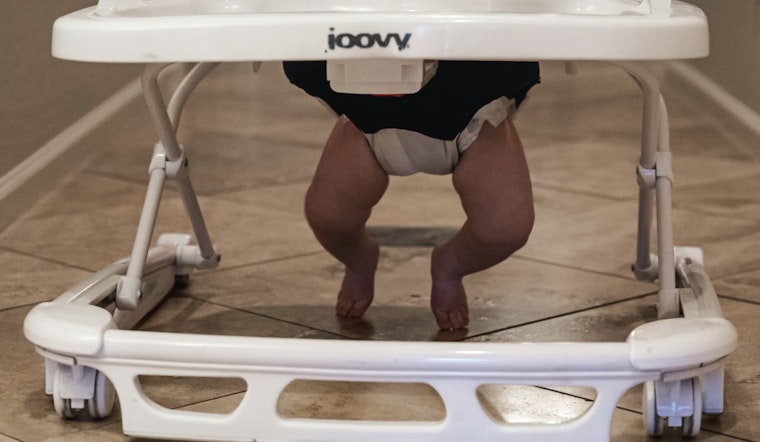
Baby walkers just got the boot from New York's licensed day cares. Gov. Kathy Hochul has signed a statewide ban on the wheeled, sit-in gadgets that let babies zip across the floor, ordering child care operators to pull them from classrooms and play areas. Lawmakers and safety advocates say the move is aimed at preventing injuries and sidelining a product pediatricians have long warned can delay healthy development.
What the law does
The legislation, passed as A9445/S8776, was signed into law on Feb. 13, 2026 and “prohibits the use of infant walkers in child care facilities,” according to the bill text on the New York State Senate website. An infant walker is defined as a mobile unit that allows a child to move across a horizontal surface while sitting or standing in the device. Under the law, no child care facility may use or keep such a device on the premises on or after the effective date. The measure also directs the Office of Children and Family Services, in consultation with the New York City Department of Health and Mental Hygiene, to notify providers and applicants in plain, non-technical language.
Who pushed the change
The bill was carried in the Assembly by Assemblymember Amy Paulin and sponsored in the Senate by Sen. Cordell Cleare. Paulin told PIX11 that walkers “do not promote independent walking and can delay development of pulling up, balancing, and taking unsupported steps” and warned that infant walkers have led to “horrific tragedies.”
Why safety experts backed the ban
Safety groups and pediatricians have for years flagged sit-in walkers as hazardous. Reporting by Consumer Reports details U.S. injury data that once put walker-related emergency-room visits in the thousands annually, and the U.S. Consumer Product Safety Commission continues to track recalls and post warnings for models with fall or entrapment risks. The American Academy of Pediatrics has also urged limits on walkers, saying they can delay motor development and expose infants to falls, burns, and drownings.
What parents and day-care providers should do
Under the new law, the state will notify current licensees and applicants about the ban, and providers are expected to remove any sit-in walkers by the effective date and swap them for safer options such as stationary activity centers and supervised floor time. PIX11 reports the measure is set to take effect 90 days after the governor signed it; providers and parents should check directly with their local program for a confirmed timeline. The bill also requires plain-language notice to be given to every child care facility “upon the effective date” or as soon as practicable afterward, according to the official bill text.
Enforcement details and any penalties will be set by state regulators as they issue guidance, and the Office of Children and Family Services is expected to publish instructions as programs transition away from walkers. For background on the safety record and recent product warnings, see reporting from Consumer Reports and the U.S. Consumer Product Safety Commission's advisories.





