

























































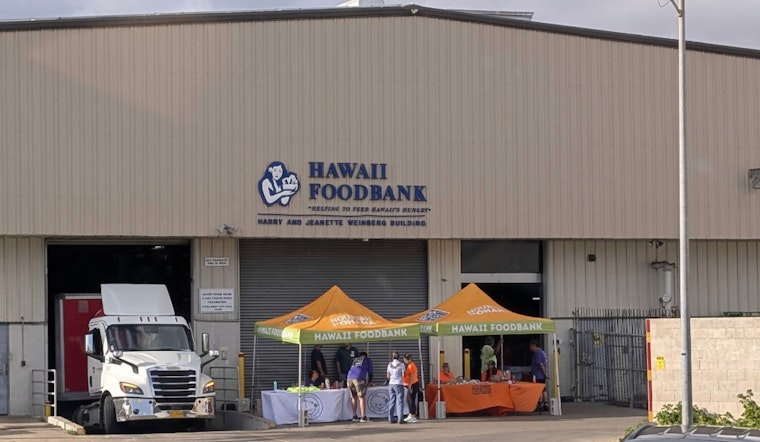
Hawaii’s hunger fighters say the warning lights are blinking red. Between soaring costs and recent shakeups in federal food support, more local families are landing on the edge of crisis. This week’s Spotlight Now segment pulls together nonprofit and government leaders to spell out who is hurting most and what fixes are actually on the table. Their bottom line is not sugarcoated: the problem is baked into Hawaii’s high cost of living, and the safety net is already stretched to its limit.
According to Hawaii News Now, the segment features Hawaiʻi Foodbank CEO Amy Miller, First Lady Jaime Green and Aloha United Way vice president Kayla Keehu-Alexander. Miller walks through the Foodbank’s latest numbers, Green highlights the expanded access to free school lunches for students who once paid reduced prices, and Keehu-Alexander breaks down what is coming through the 211 helpline. Together, they connect the freshest data to the day-to-day reality for families and for the charities racing to keep up.
New Report Lays Bare the Scale of Need
A statewide survey from the Hawaiʻi Food Bank Hui found that roughly one in three households experienced food insecurity between mid-2024 and mid-2025. The share of households with children reporting shortages climbed from 29% to 34%. As Civil Beat reports, some counties saw insecurity rates in the low 40s, and many parents are quietly skipping meals so their kids can eat. Advocates say lost commodity shipments and other federal funding disruptions have only intensified demand and thinned out food-bank supplies.
Free School Meals Expansion Widens Safety Net for Kids
Lawmakers approved Senate Bill 1300 to grow the state’s free school meals program so that, starting in the 2025-26 school year, students who previously qualified for reduced-price lunches now receive both breakfast and lunch at no cost. A Governor’s Office release explains that the law expands eligibility again in 2026-27 and funds the Department of Education to cover the added meals. Officials say cutting paperwork and stigma out of the equation is meant to keep more keiki consistently fed while they are in class.
211 Helpline Shows How Stretched Nonprofits Are
Aloha United Way’s 211 helpline, the statewide starting point for referrals to food, housing and utility assistance, fielded more than 58,000 requests in 2023. That volume underscores just how many people are looking for help, according to Hawaii Business. Staff members use the calls to spot patterns, steer people to multiple services and help funders and partner agencies see where gaps are opening up. The growing mountain of 211 data has become a crucial planning tool as nonprofits try to stretch limited dollars and staff time.
How Food Gets to Families and How to Help
Hawaiʻi Foodbank reports that in the last fiscal year it distributed food equal to more than 17.7 million meals and now serves about 160,000 people each month, using its warehouses to move donated and purchased food across the islands. The Foodbank and partner agencies warn that lost federal commodity shipments and program changes have forced them to lean harder on state grants and private donations to replace roughly $4 million in lost food aid. “I just tell them I’m intermittent fasting, so they don’t know,” one parent told reporters, a small but searing snapshot of the tradeoffs families are making.
For anyone in immediate need, calling 211 or visiting Aloha United Way connects residents with local pantries, emergency assistance and school-meal information. Lawmakers and service providers say the expanded school-meals law, targeted state funding and steady volunteer power will all be critical if Hawaii is going to close the widening gap between need and available food. The Spotlight Now segment takes a deeper look at the report and at the next steps leaders say will be necessary to keep island families fed.





