

























































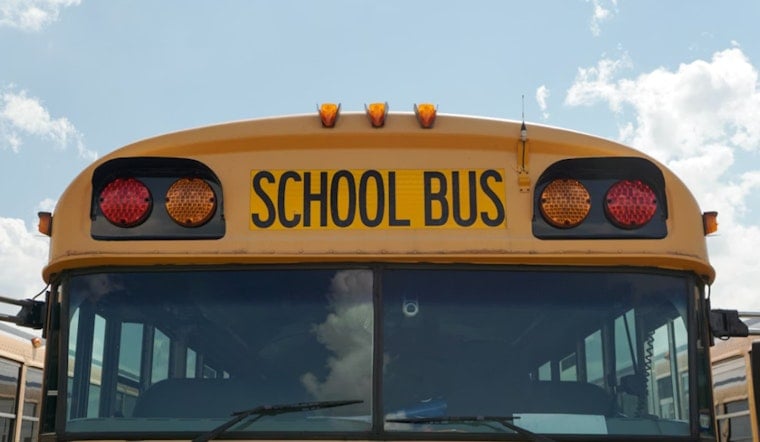
If you are in the habit of zipping past stopped school buses in Jacksonville, consider this your heads-up. Duval County Public Schools is outfitting more than 900 buses with stop-arm cameras this spring in a push to catch drivers who blow past extended stop signs and flashing red lights.
Installation began in March, and the district says the cameras will be switched on April 1 for a public-awareness period that sends out warning notices instead of tickets. Come May 1, those warnings turn into real citations with a $225 fine. The district says the program will cover more than 30,000 Team Duval riders and will run on a revenue-sharing model so it does not require upfront district funding.
According to Duval County Public Schools, the technology records video and license-plate information whenever a vehicle illegally passes a stopped bus with its stop arm extended and red lights flashing. Law enforcement will review each recorded incident before a Notice of Violation goes out. During April, violators will receive mailed warnings that include a link to watch the incident footage, and DCPS says camera installation is expected to wrap up by the end of April.
Why the District Is Rolling It Out
A statewide survey logged more than 8,000 illegal school-bus passings in 2025, according to the Florida Department of Education. District officials point to those numbers as a reason to lean on automated enforcement, arguing that the threat of being caught on camera can change driver behavior and lower the risk of serious injuries around bus stops.
Vendor, Cost and How Tickets Are Handled
Duval County Public Schools says it has approved BusPatrol America for a three-year contract to run the program, including detection, evidence delivery and citation support. BusPatrol describes its system as a fully managed solution with no upfront cost to districts, funded instead through a revenue-sharing model tied to citations, which the district says is how Duval's program is structured.
Pushback and Accuracy Concerns
Not everyone is sold on automated stop-arm enforcement. Similar programs around the country have faced complaints about false positives, disputed notices and a sense that the cameras generate revenue as much as they promote safety. Drivers in some jurisdictions have reported getting tickets they insist were wrong, criticisms that surfaced in an Action News Jax investigation into the technology's accuracy and oversight.
Legal and Appeals Process
Florida law sets the penalty for illegally passing a stopped school bus at $225, and the authority for stop-arm camera programs is laid out in state statute 316.172. Notices will include instructions on how to pay or contest the charge, and the registered owner may be required to provide proof or an affidavit if they were not behind the wheel. BusPatrol's citation support materials outline how districts typically handle evidence review and appeals.
The district plans a public-awareness campaign throughout April so drivers see warning letters before fines kick in on May 1, and it is urging motorists to slow down around buses and take the flashing reds seriously. Local TV outlets have also highlighted the rollout; First Coast News has additional coverage of how the cameras will work on Jacksonville roads.





