

























































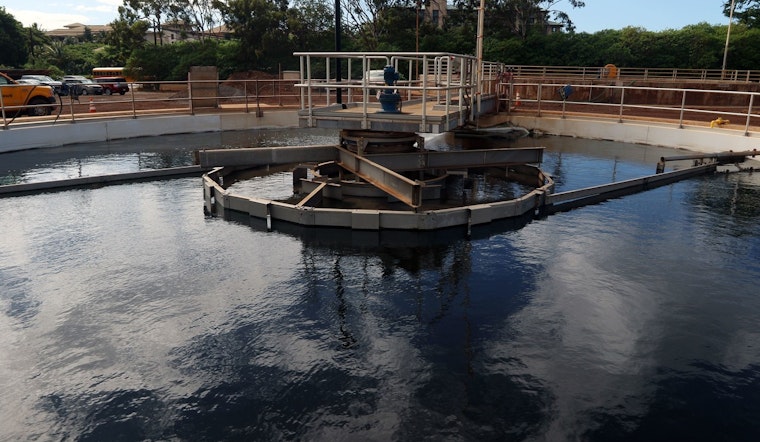
As the island’s second Kona storm pounded West Maui on March 21, roughly 200,000 gallons of partially treated wastewater spilled out of the Lahaina Wastewater Reclamation Facility, according to county officials.
The County of Maui’s Department of Environmental Management said the overflow began around 2 p.m. when a manhole became surcharged. Crews managed to stop the discharge at about 11 p.m. The flow, described as mostly filter backwash and treated effluent that had not been fully disinfected, entered a storm drain that was already carrying heavy runoff and likely reached nearshore waters. Warning signs went up in the affected area, and state health officials were alerted.
Those details come from the county’s Department of Environmental Management, as reported by Maui Now. The Hawaiʻi State Department of Health’s Clean Water Branch was notified and maintains the state’s online water quality advisories.
How the overflow happened
County officials said the manhole was overwhelmed when excessive stormwater rushed into the sewer collection system, which pushed the system past the facility’s treatment capacity. Federal guidance notes that rainfall-derived inflow and infiltration can quickly overload sanitary sewers and trigger manhole or pipe overflows, according to the U.S. EPA.
Why this matters for reefs and public health
Any release of partially treated wastewater nearshore can pose problems for both people and marine life. Nutrients and fecal indicator bacteria carried into coastal waters can degrade water quality, stress coral reefs, and raise health risks for swimmers and surfers.
The Lahaina facility has already spent years under the microscope for its injection wells and their connection to the ocean. Environmental groups and federal courts have previously concluded that effluent from the plant can reach nearshore waters and may require Clean Water Act permits, according to the Ninth Circuit decision as published by Justia.
Officials' response
Maui Now reports that county crews halted the overflow by around 11 p.m. and posted warning signs in the impacted area to alert beachgoers and nearby residents.
County officials provide wastewater information and contact details through the Maui County Department of Environmental Management, which outlines how to report concerns and find updates on wastewater incidents.
What residents and visitors should know
The Department of Health advises people to steer clear of ocean areas near storm drains and stream mouths, especially when water looks brown or murky, and to check for posted advisories before getting in the water. Active alerts and sampling results for beaches and nearshore waters are listed on the Hawaiʻi DOH online portal at the Hawaiʻi DOH site.
For more information or to report sewage concerns, residents and visitors can contact the County of Maui’s Department of Environmental Management or visit the county website, where the department lists phone numbers, online resources, and guidance for reporting and tracking wastewater issues.





